Product Design/ UIUX Project
Enterprise Resource Planning Product
Designing a role-based ERP system for scalable operations
— Stockfeel
— Stockfeel
— Stockfeel
Background & Context
This project focused on designing an internal ERP system for cross-department operations, data management, and permission control.
I worked with product, operations, and engineering teams to turn fragmented workflows and legacy data into a maintainable system structure, with an emphasis on system rules and long-term scalability.
Industry
IT
Year
2022
Client
StockFeel
Role
UIUX Designer, PM
Delivery
Website
Link
Private

Enterprise Resource Planning Product |Personal Achievements
I led ERP product planning and design, conducted requirement interviews across departments, mapped internal workflows, and translated them into a scalable system solution.
1
Led ERP product planning and UX design in collaboration with multiple departments
2
Conducted requirement interviews and translated operational workflows into system design
3
Defined product structure, permissions, and data logic with full-stack engineers
4
Led two major design iterations based on internal user feedback
5
Planned onboarding, training, and internal documentation to support adoption

Enterprise Resource Planning Product |Personal Achievements
I led ERP product planning and design, conducted requirement interviews across departments, mapped internal workflows, and translated them into a scalable system solution.
1
Led ERP product planning and UX design in collaboration with multiple departments
2
Conducted requirement interviews and translated operational workflows into system design
3
Defined product structure, permissions, and data logic with full-stack engineers
4
Led two major design iterations based on internal user feedback
5
Planned onboarding, training, and internal documentation to support adoption
Introduction
At a Glance
Problem & Opportunity
Before this project, StockFeel did not have a unified membership system. Users could freely browse content, but the product lacked the ability to understand individual behavior, retain preferences, or deliver personalized experiences.
From a business perspective, this limited long-term engagement and made it difficult to evolve beyond content distribution.
The core challenge was not simply adding accounts, but defining what value membership should provide at the moment users decide to sign in.
The Goal
As the organization scaled, fragmented tools and manual processes led to:
Inconsistent data definitions and unclear ownership
High coordination cost across departments
Limited visibility into operational status and performance

Establish a centralized system to support core operational workflows
Reduce manual coordination and error-prone processes
Define clear data ownership, permissions, and role boundaries
Build a system structure that could scale with organizational growth
Research & Insights
Organizational & Workflow Analysis
I collaborated with stakeholders from different departments to understand their daily workflows, decision points, and data dependencies. This revealed that many conflicts stemmed not from missing features, but from unclear rules and overlapping responsibilities.
Specialist/Assistant
Head of the Dept.
Management Dept.
Financial Dept.
Key Insights
1. Users cared more about predictable rules and consistent behavior than having more features.
Users needed predictable rules and consistent data behavior to complete their work efficiently.
2. Permission design was a core product problem
Different roles required access to the same data at different levels, making permission modeling a foundational design decision rather than an implementation detail.
3. For ERP users, stability and clarity mattered more than exploration or experimentation.
Unlike consumer products, ERP users value stability and clarity over discoverability or experimentation.
Key Design Decisions
Designed the ERP as a system, not individual pages
I prioritized system logic—data flow, permissions, and role relationships—before refining UI details.
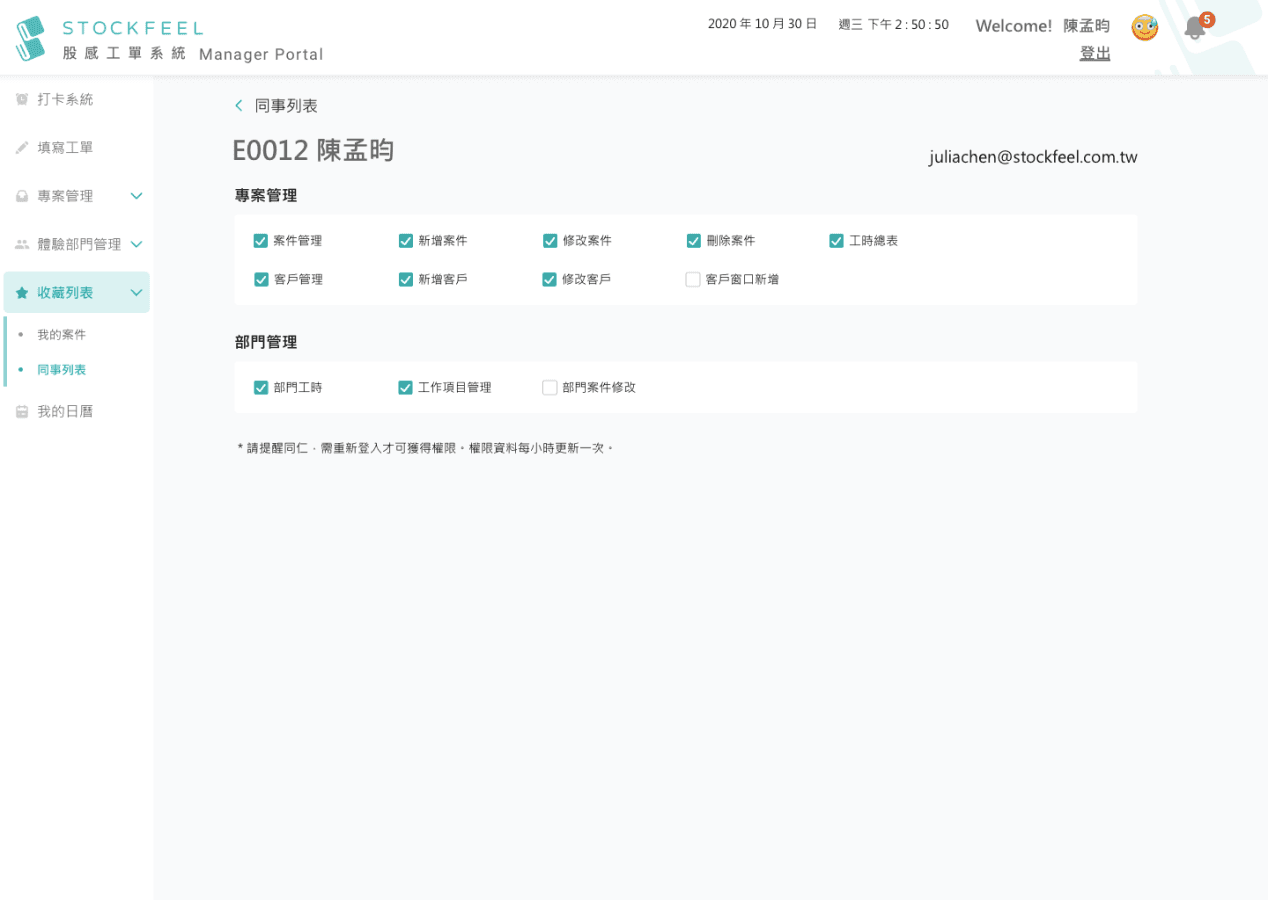
Mapped organizational structure into a clear permission model
Roles and responsibilities were translated into explicit access rules to balance flexibility and control.
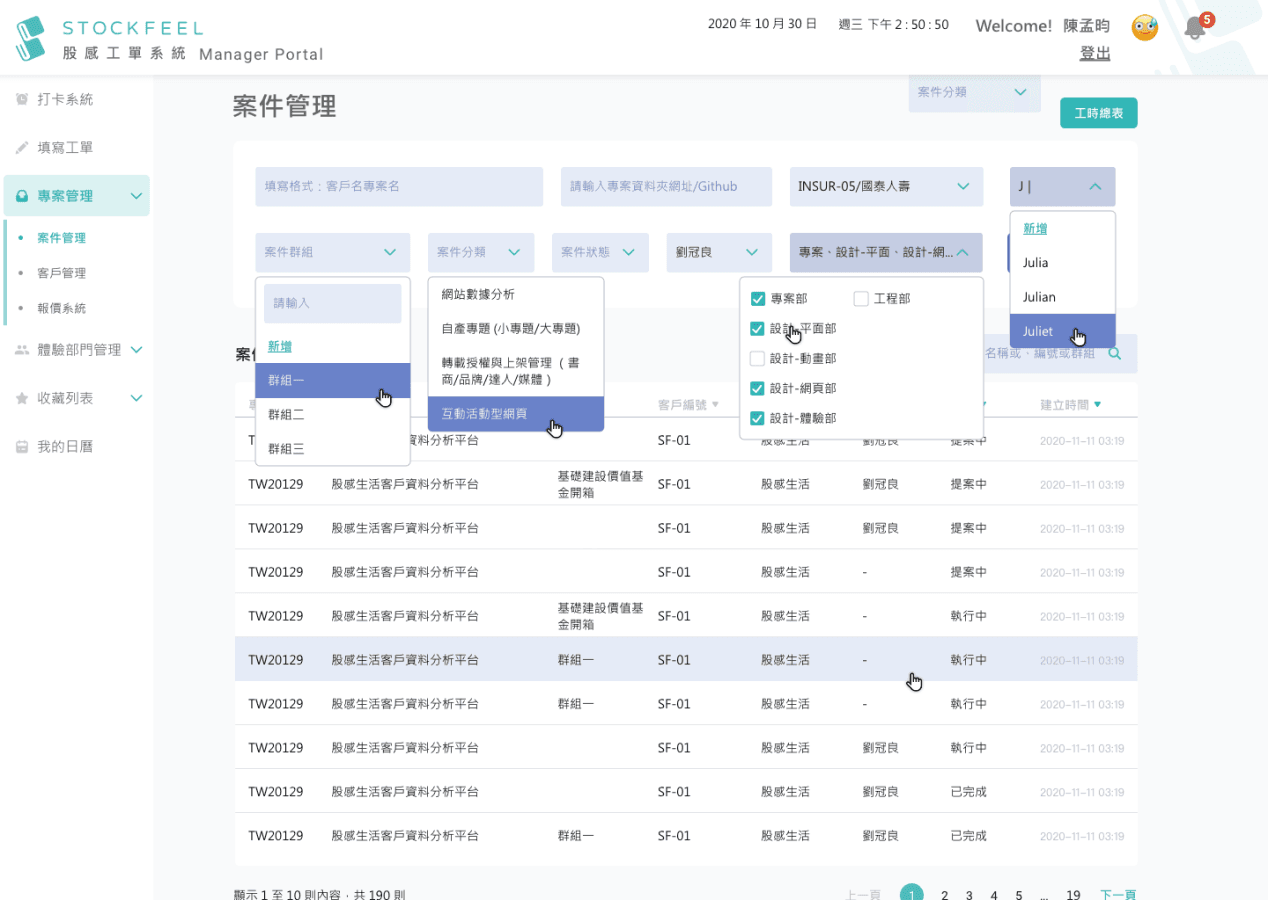
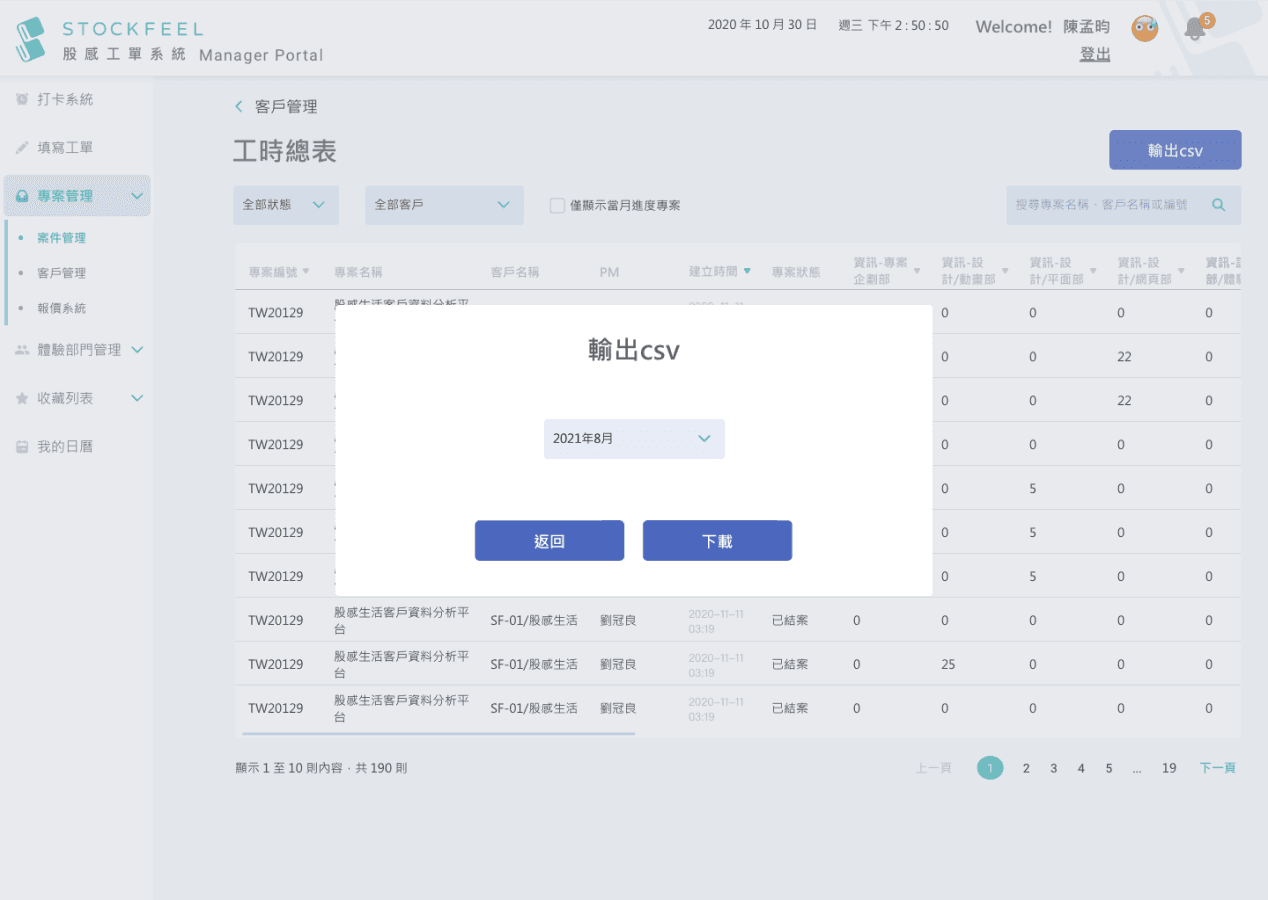
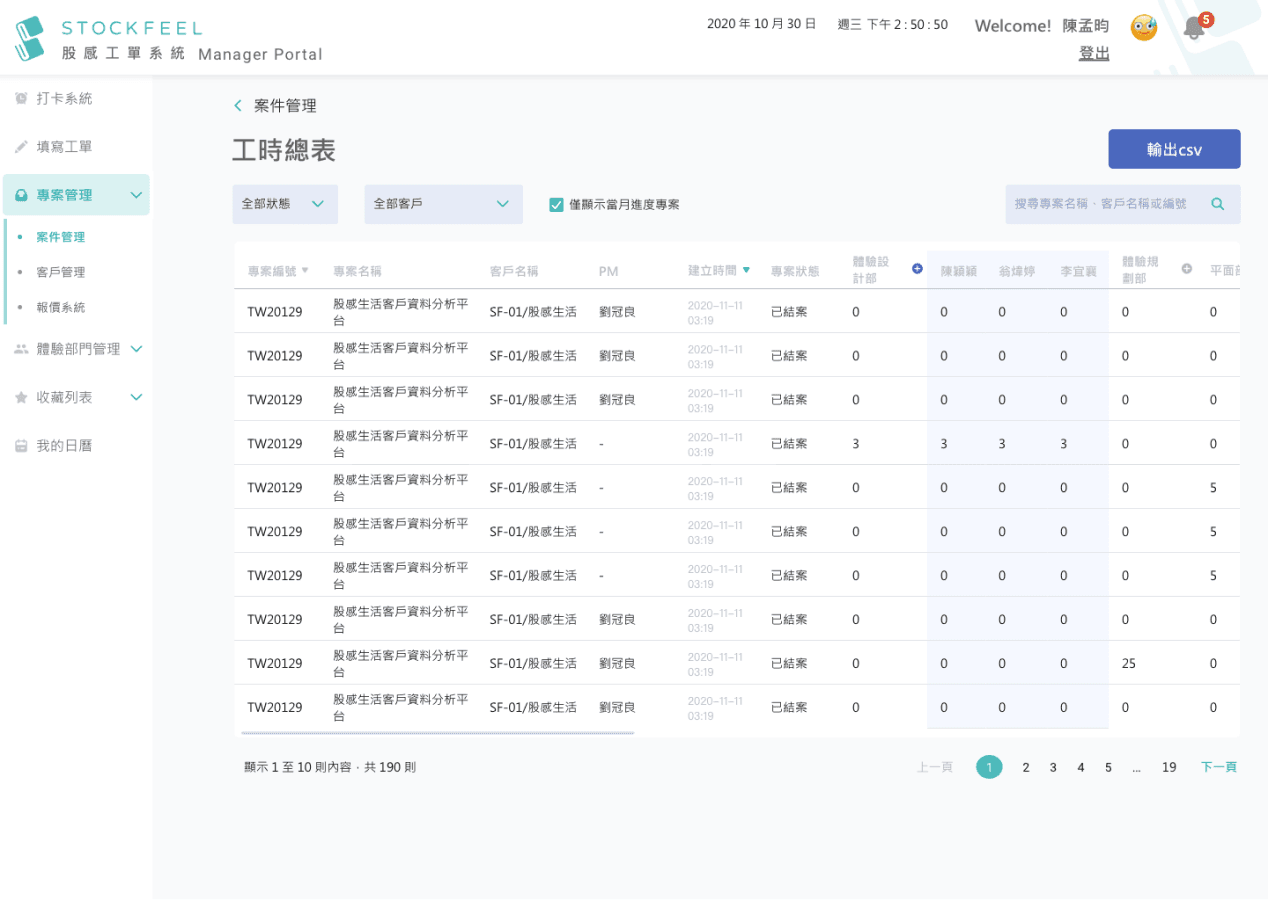
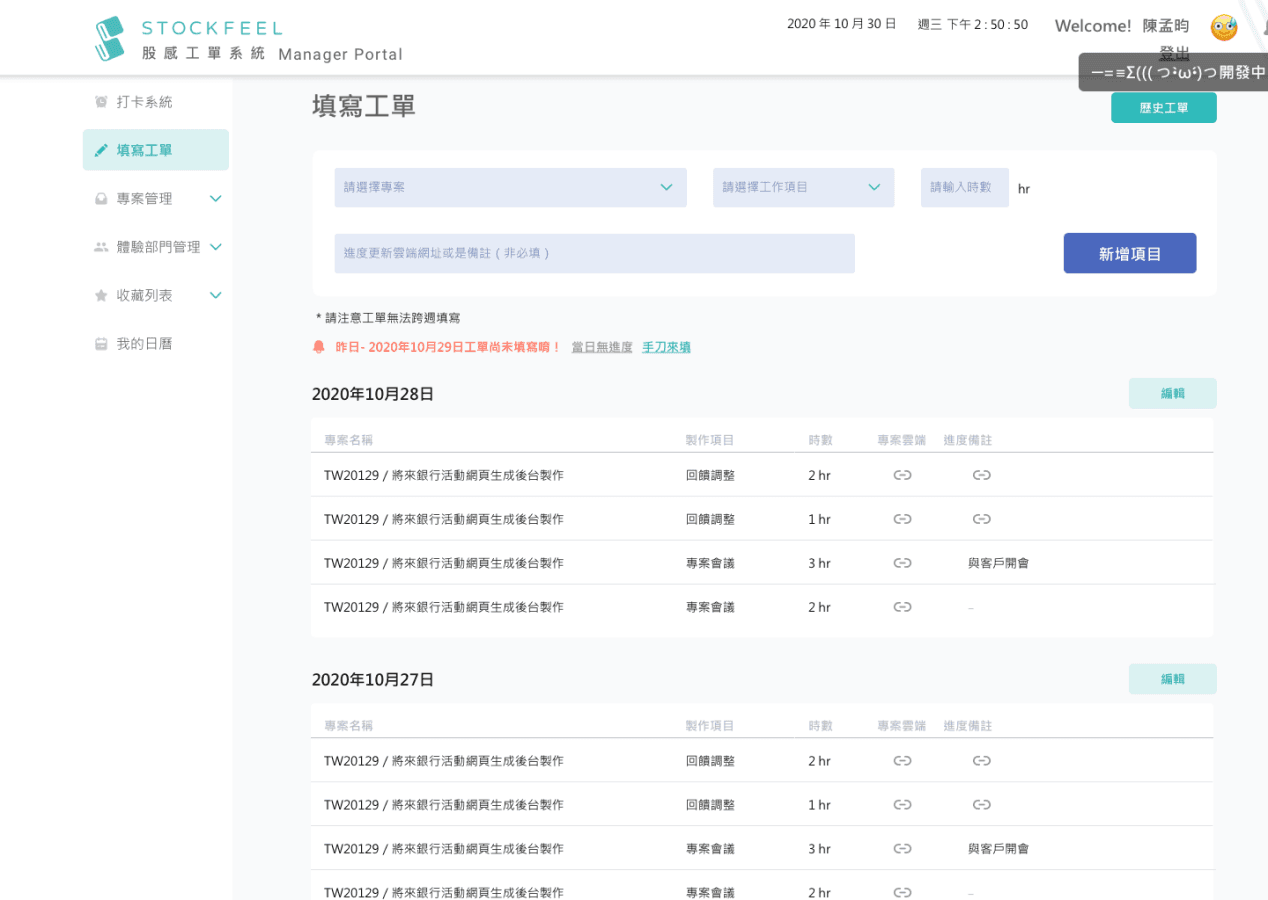
Standardized data definitions and interaction patterns
Legacy data was consolidated into a unified structure, and interactions were standardized to reduce errors and learning cost.
Design Process & Execution
System Mapping & Specification
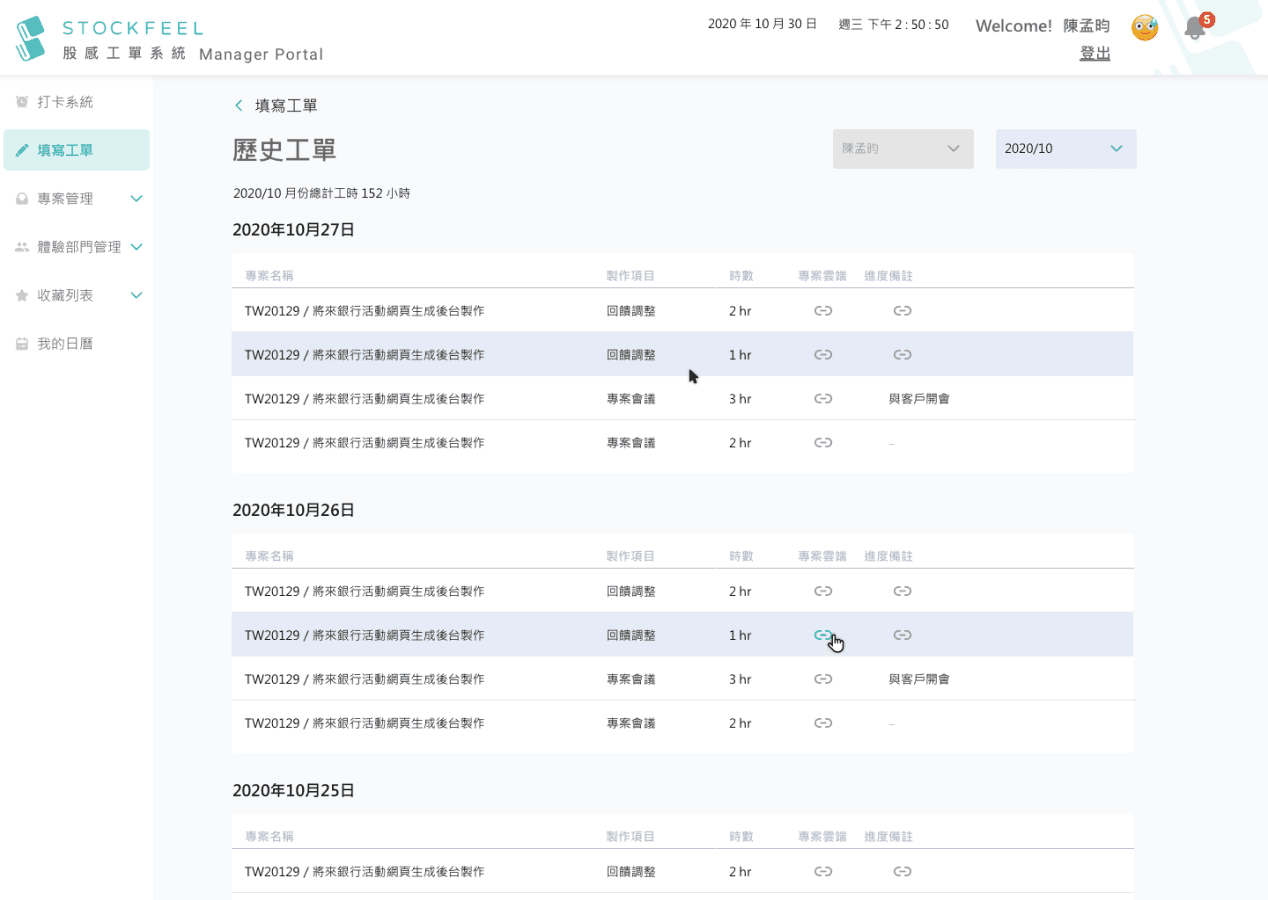
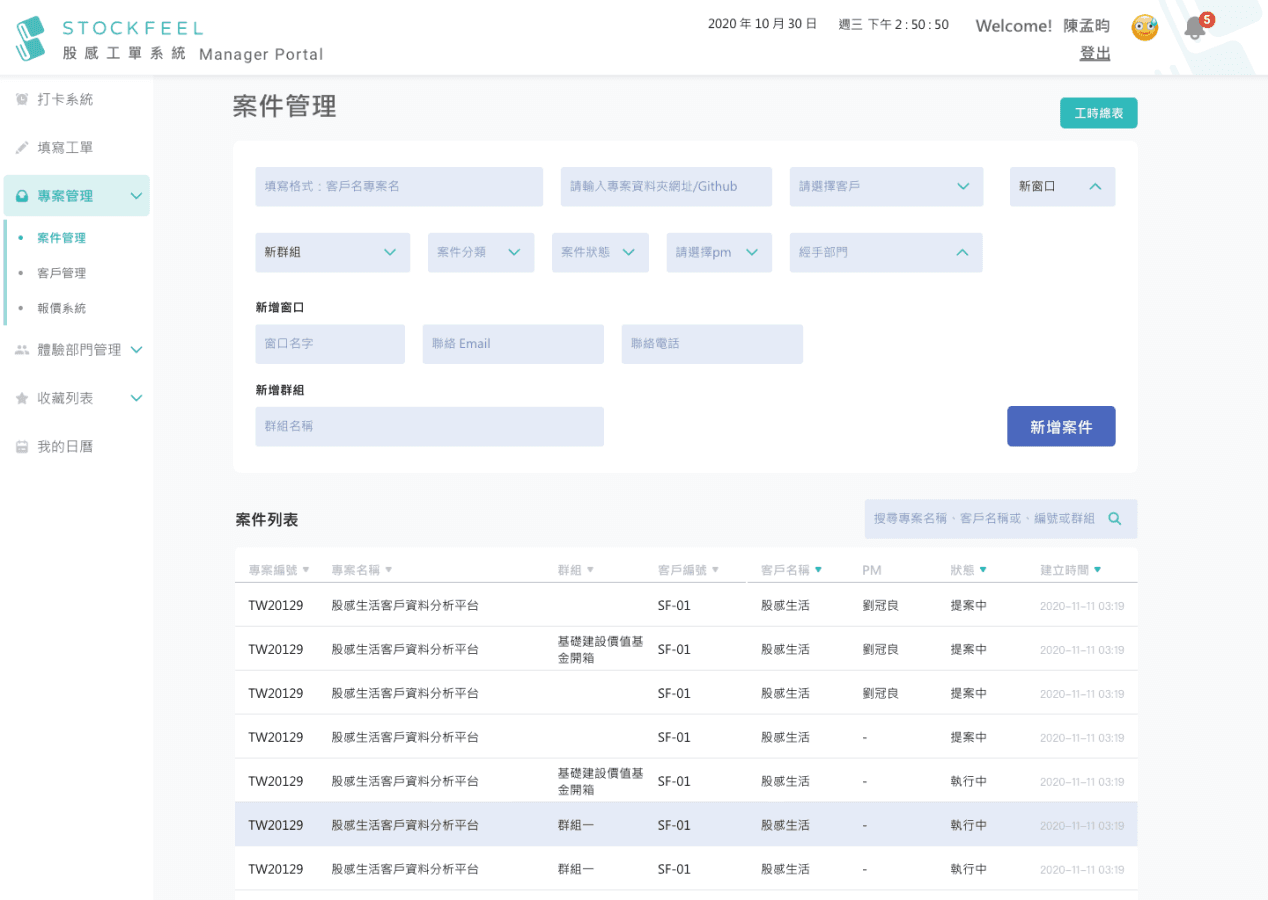
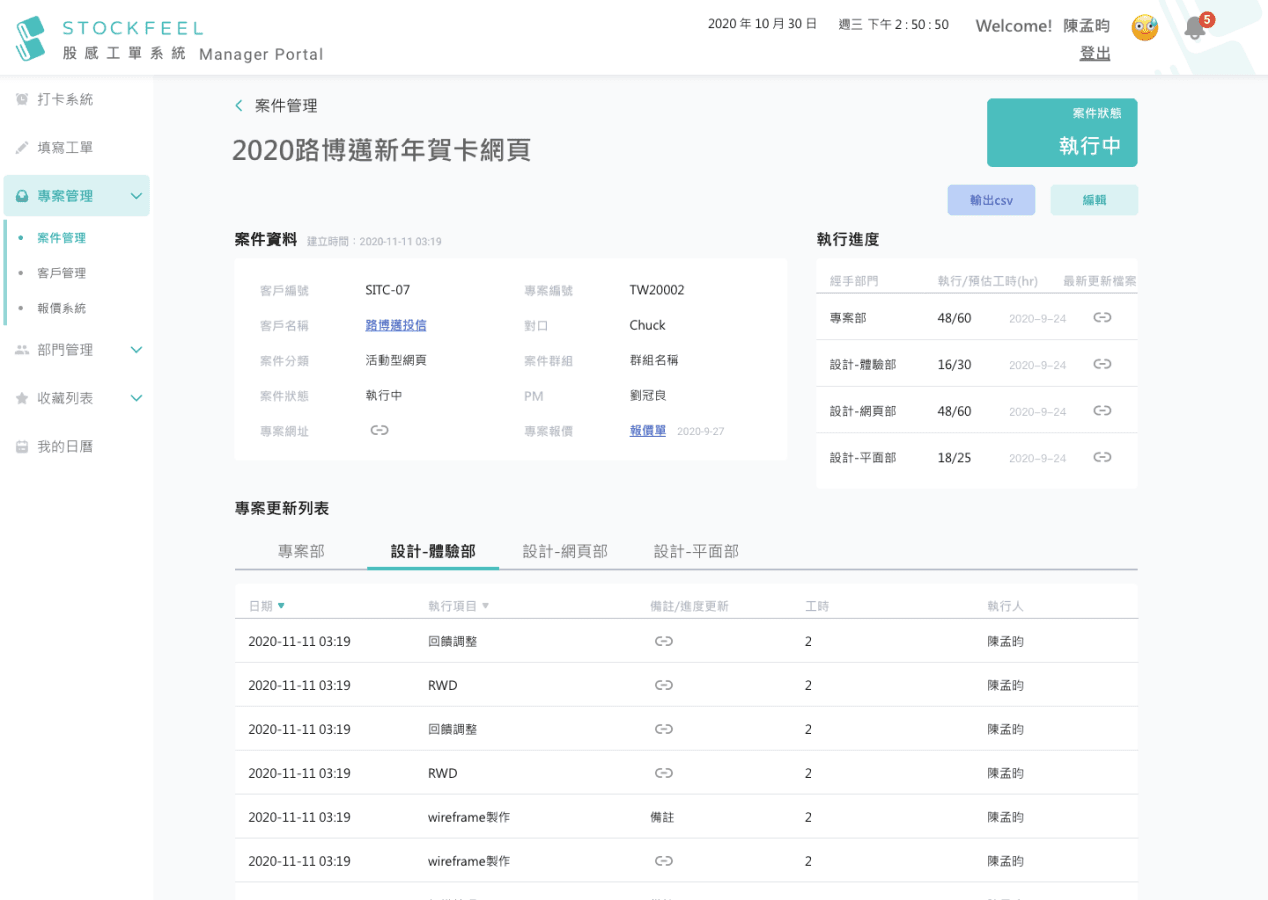
I focused on documenting system-level rules—data sources, permissions, and state changes—to ensure design intent matched engineering implementation.
Cross-Functional Collaboration
Regular reviews with product owners, operations, and engineers ensured feasibility and shared understanding before development.
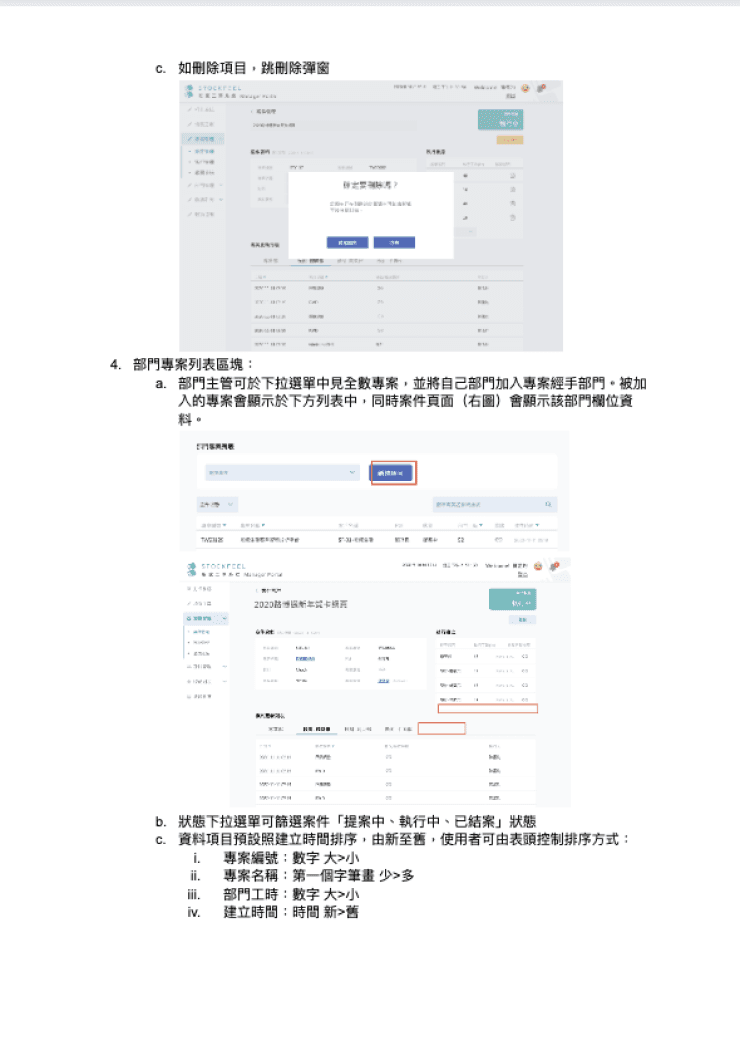
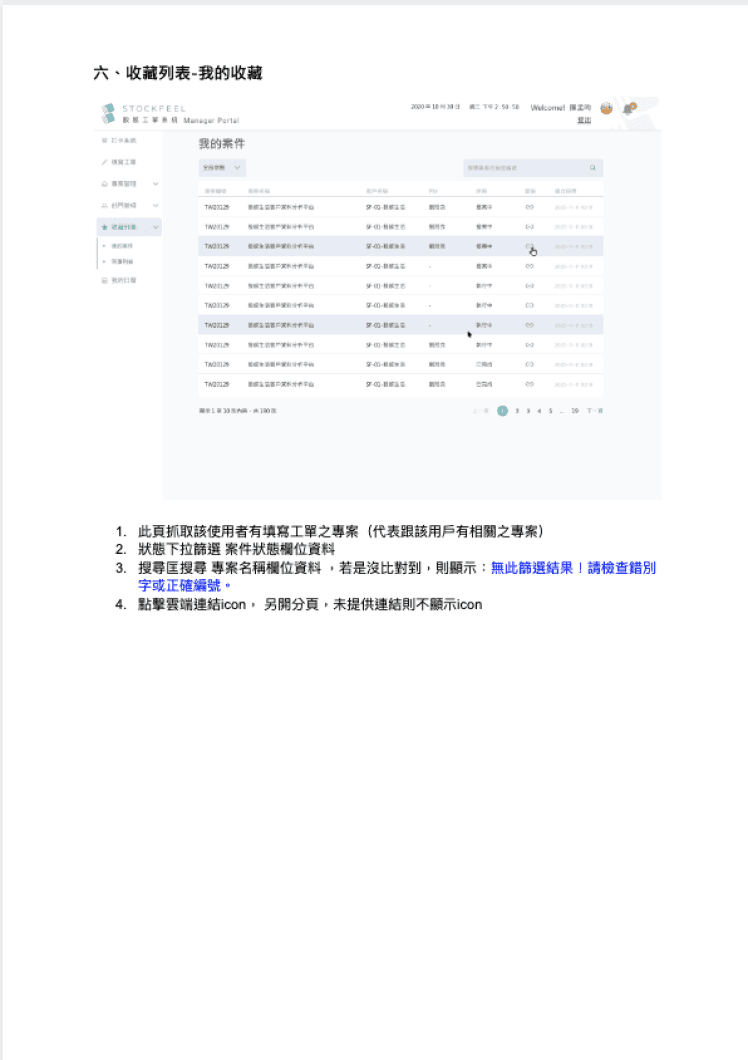
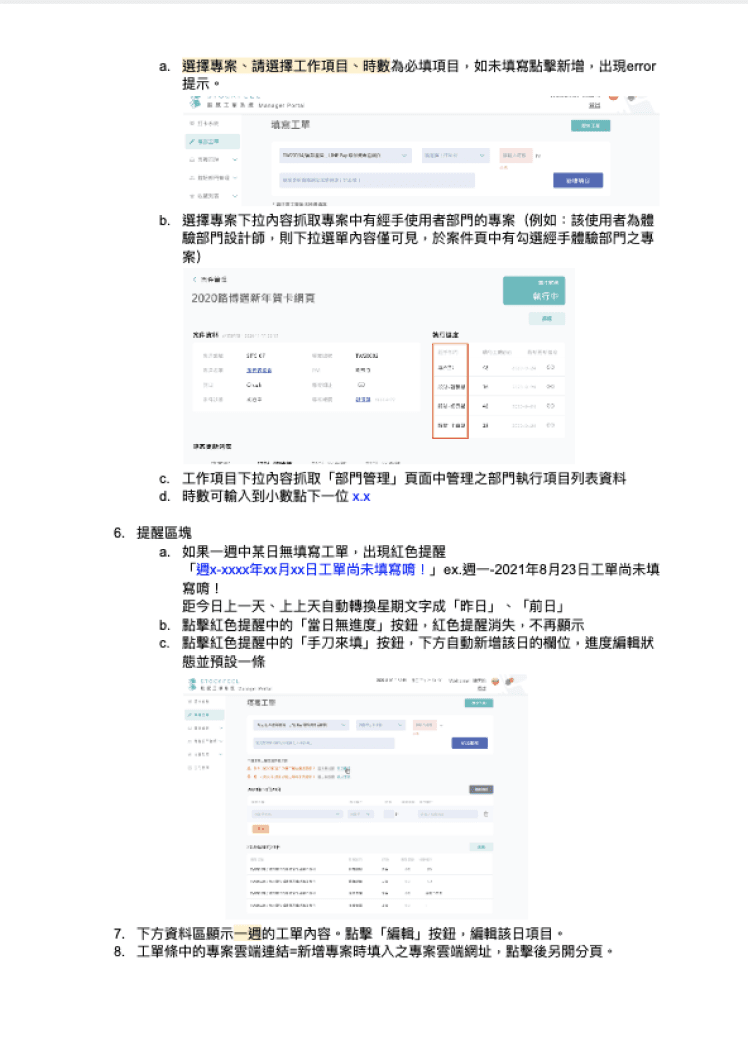
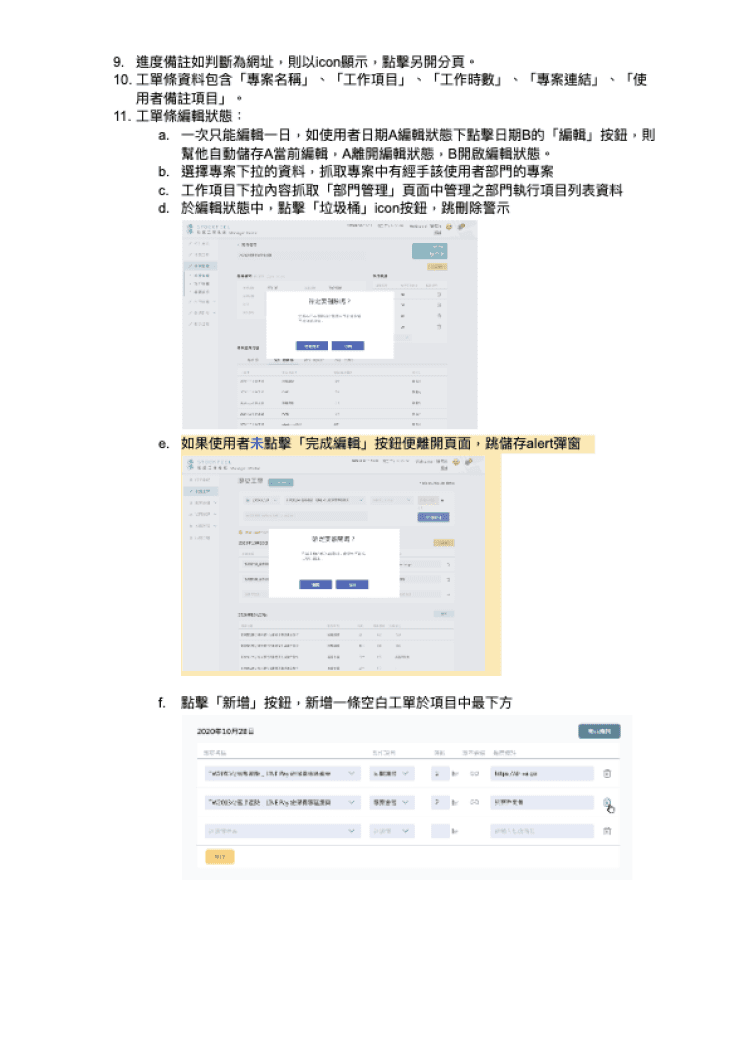
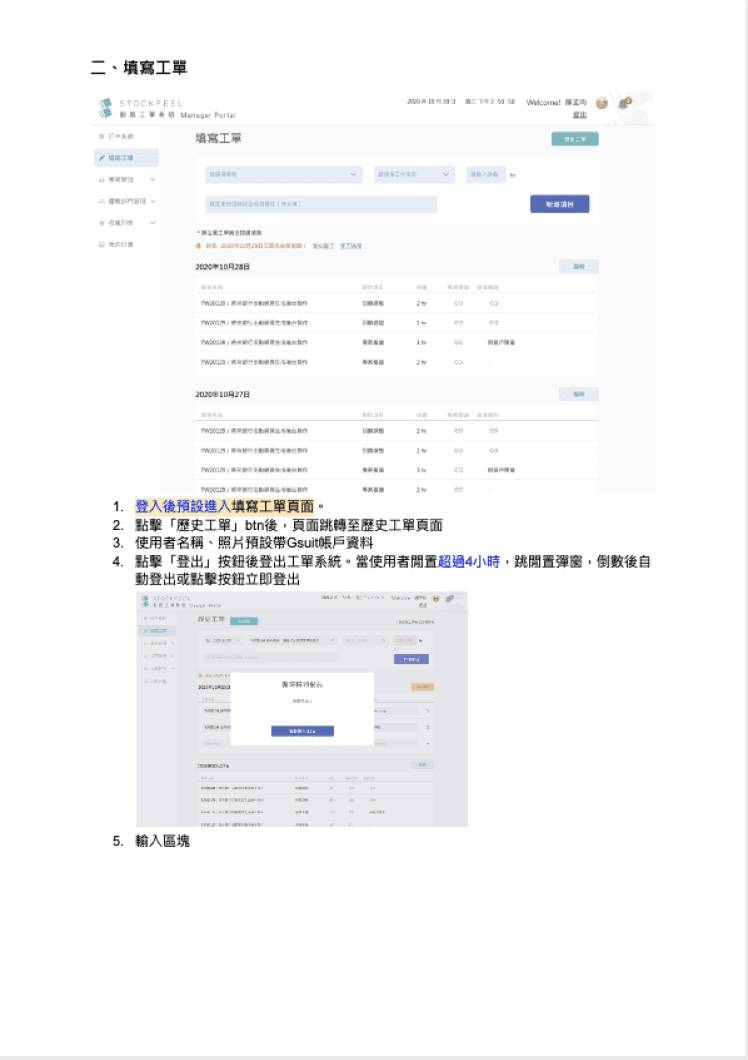
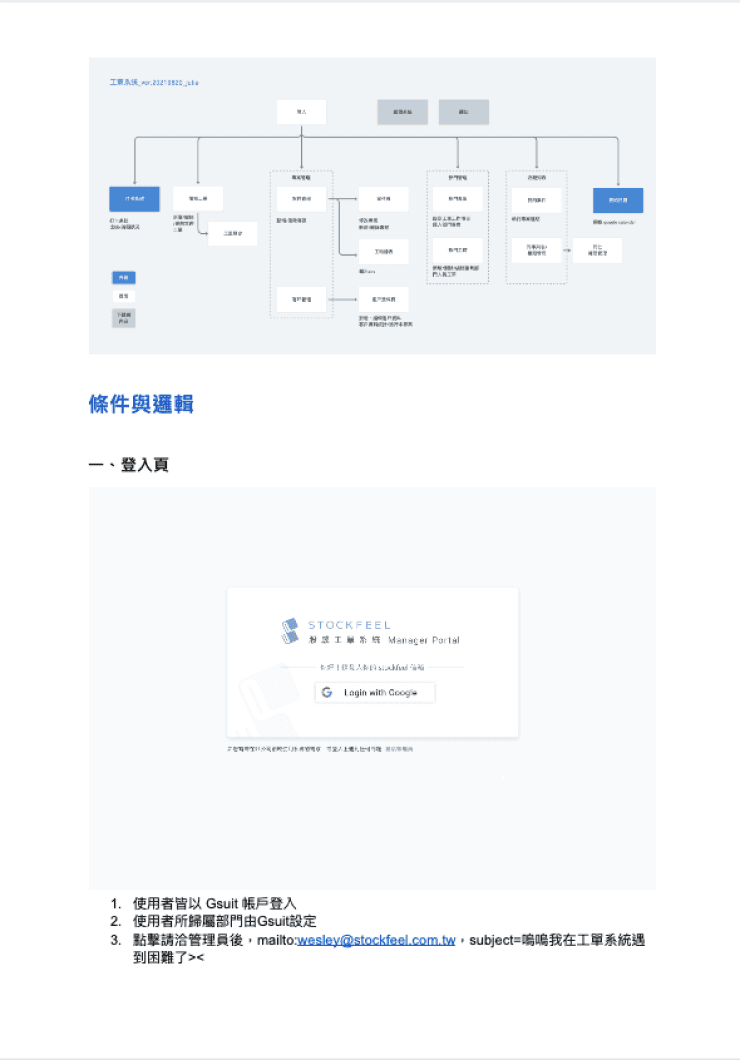
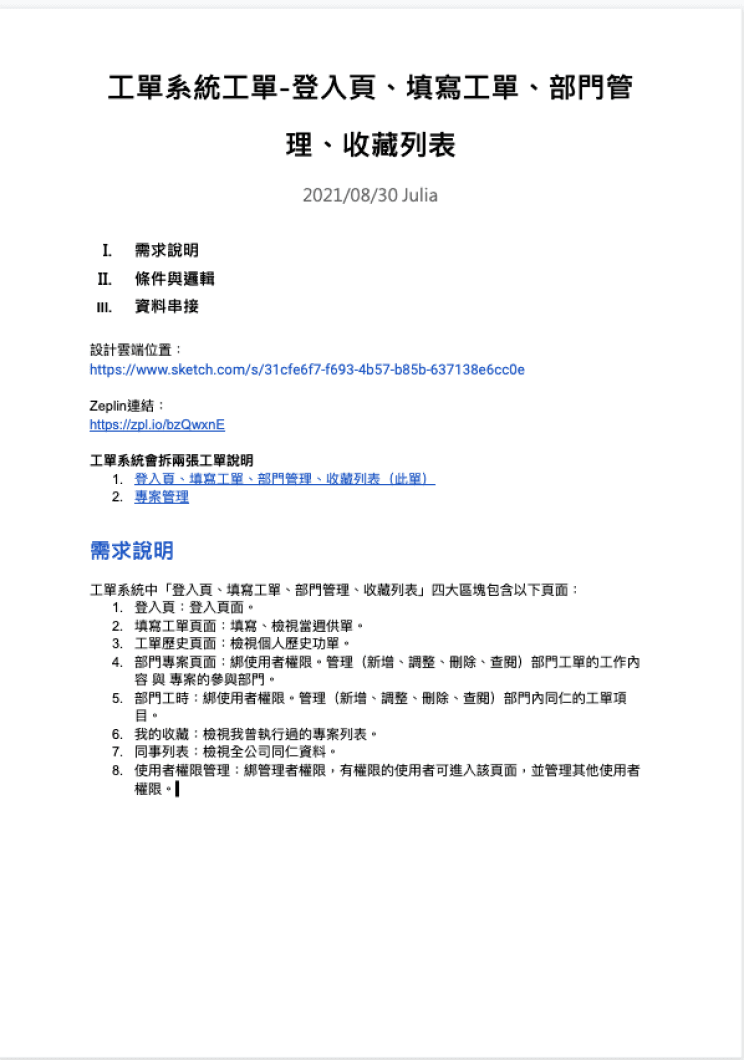
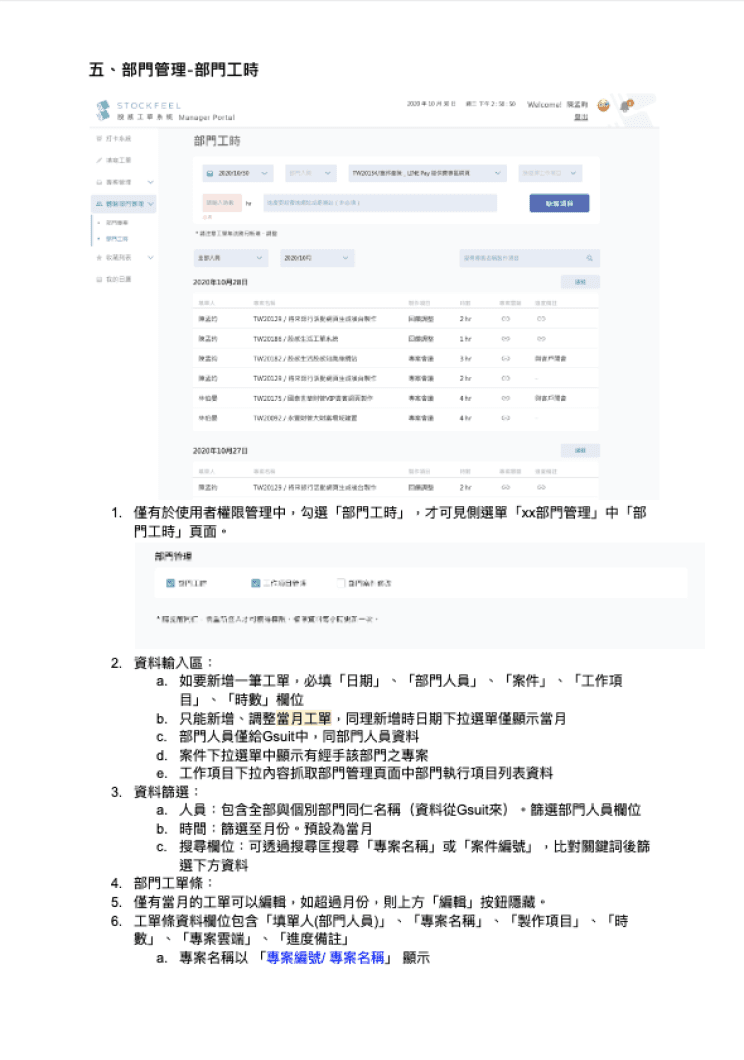
Project serial data and specification documents
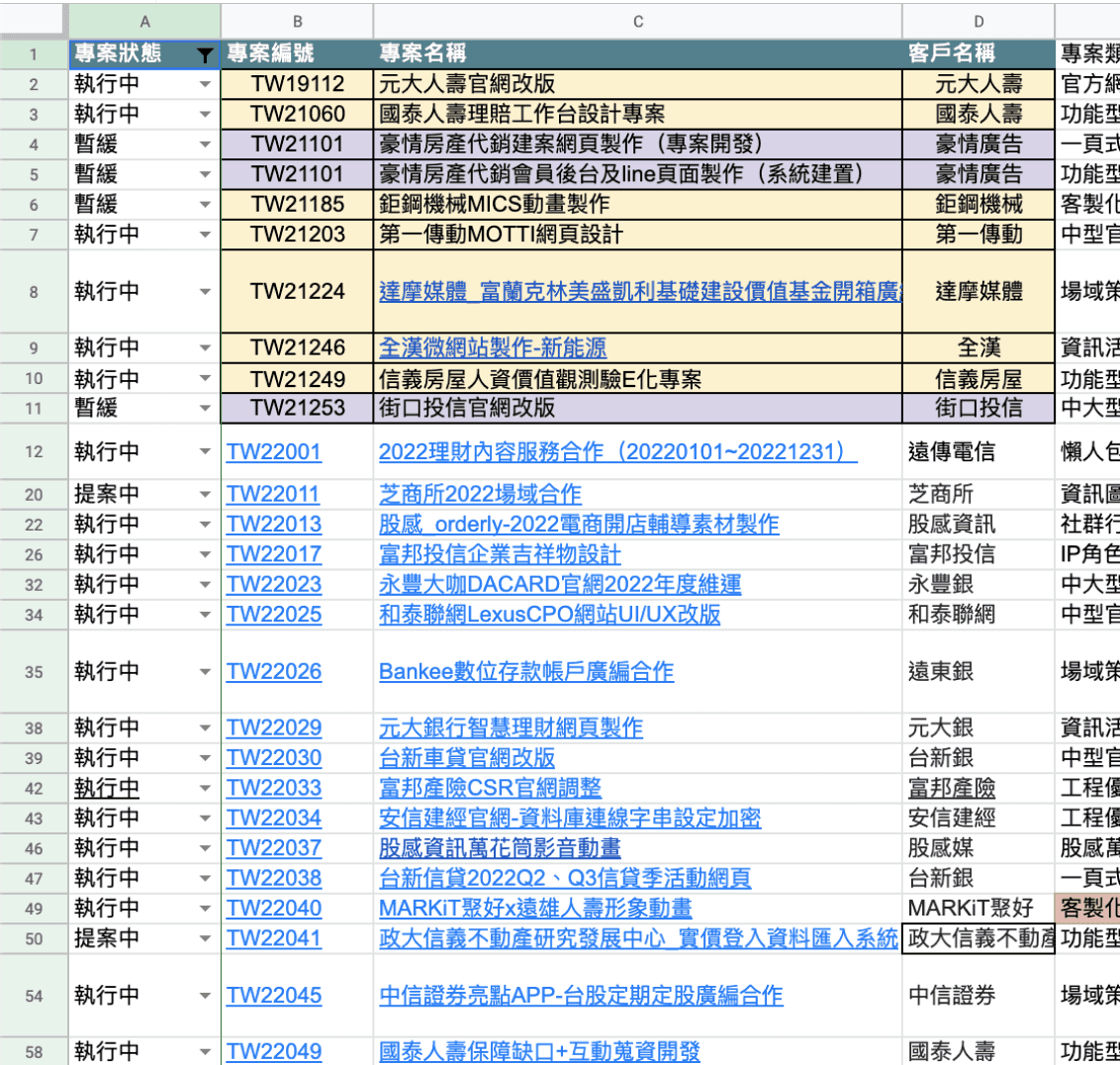
Inventory of the content of data conversion
Iteration & Validation
Design decisions were iterated based on stakeholder feedback and real operational scenarios, focusing on clarity and edge-case handling.
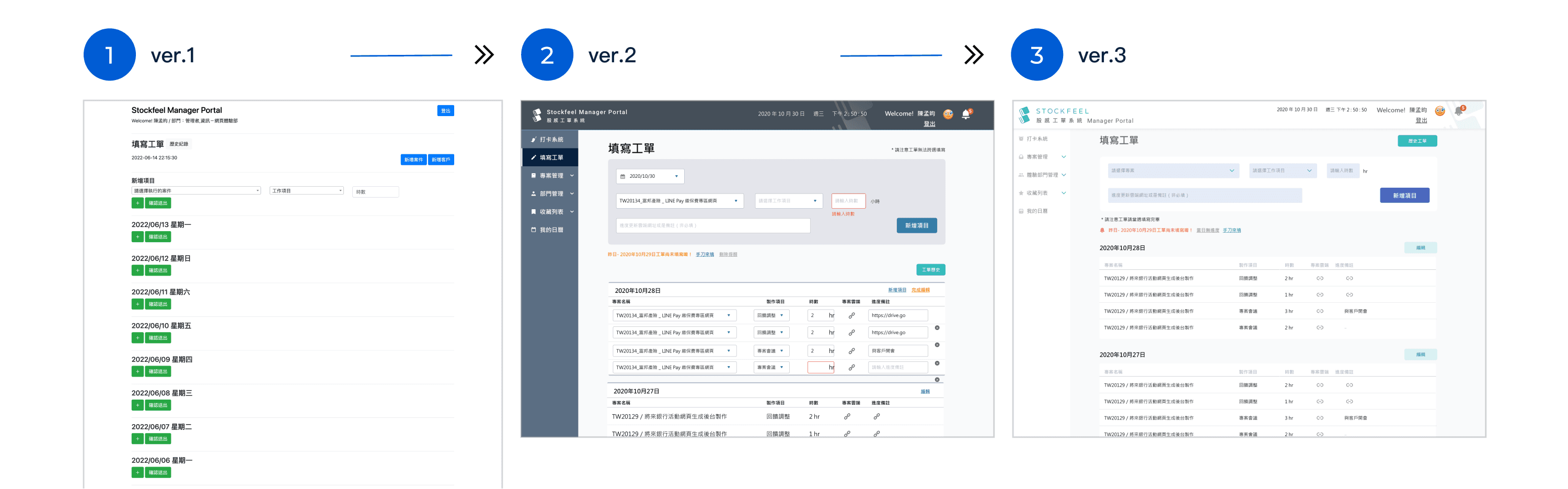
Outcome
The ERP system successfully centralized operations across departments and established a shared foundation for future growth.
Operational workflows became more standardized and predictable
Cross-department coordination cost was reduced
Data visibility and ownership were clearly defined
The project was adopted as a long-term internal platform and continued to evolve as business needs expanded.
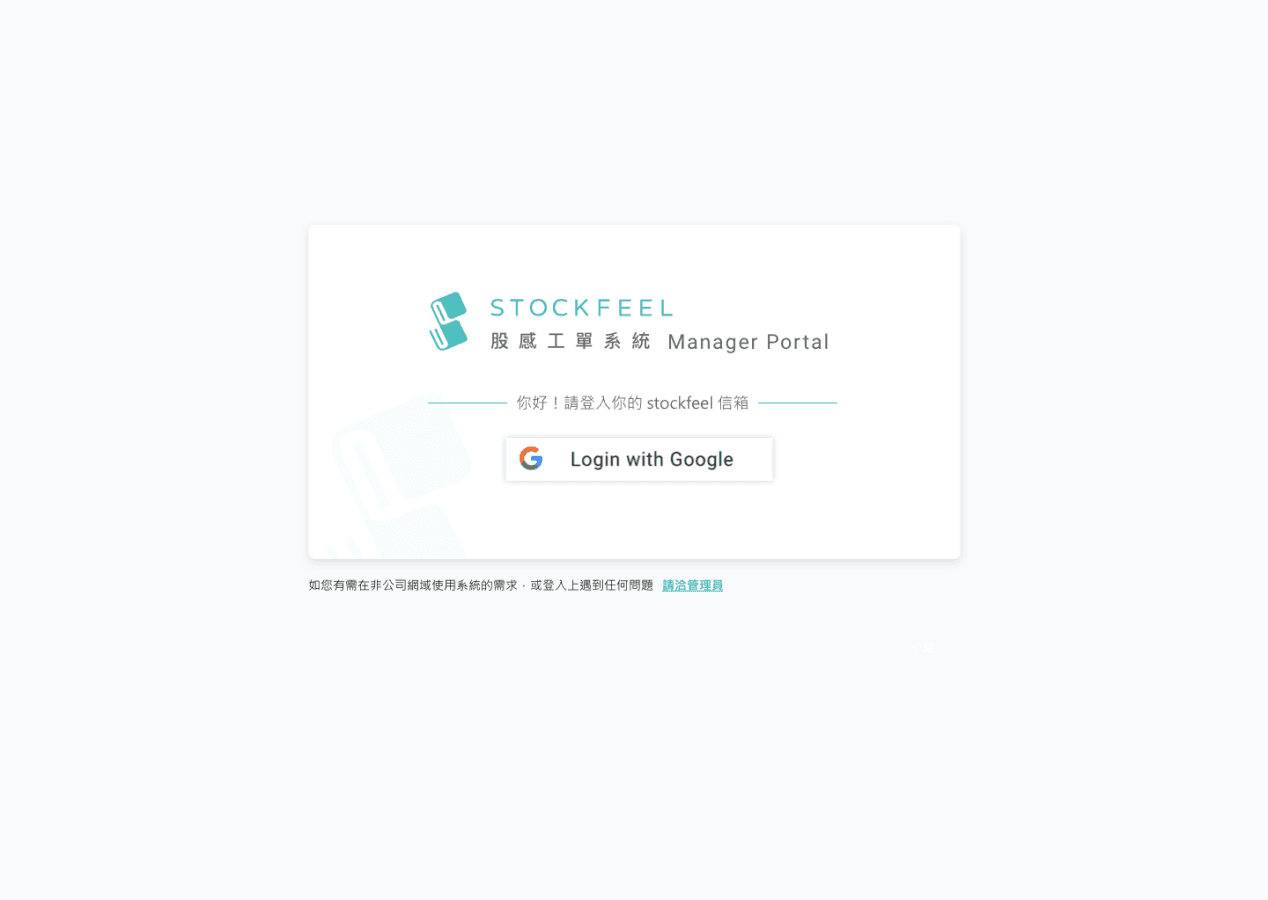
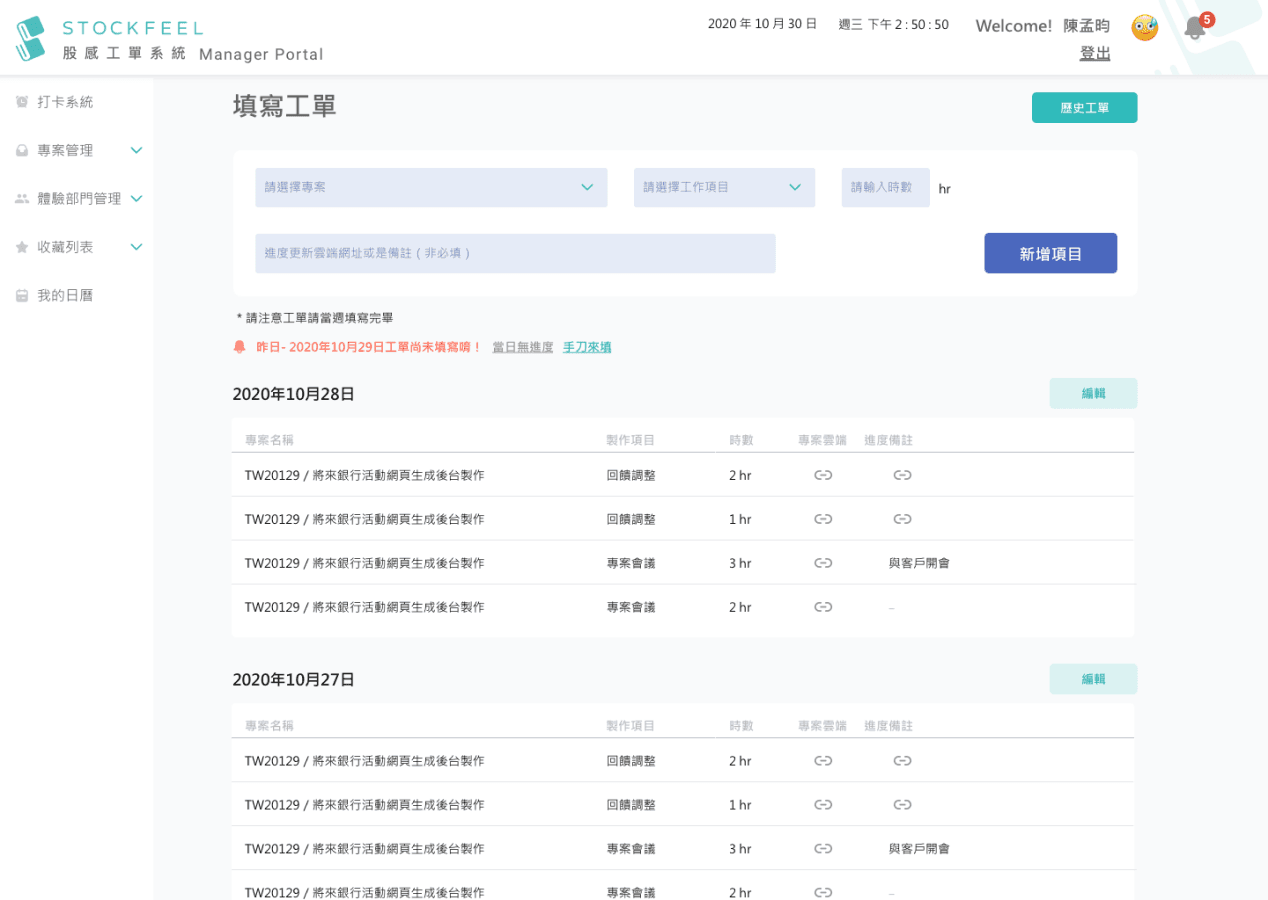
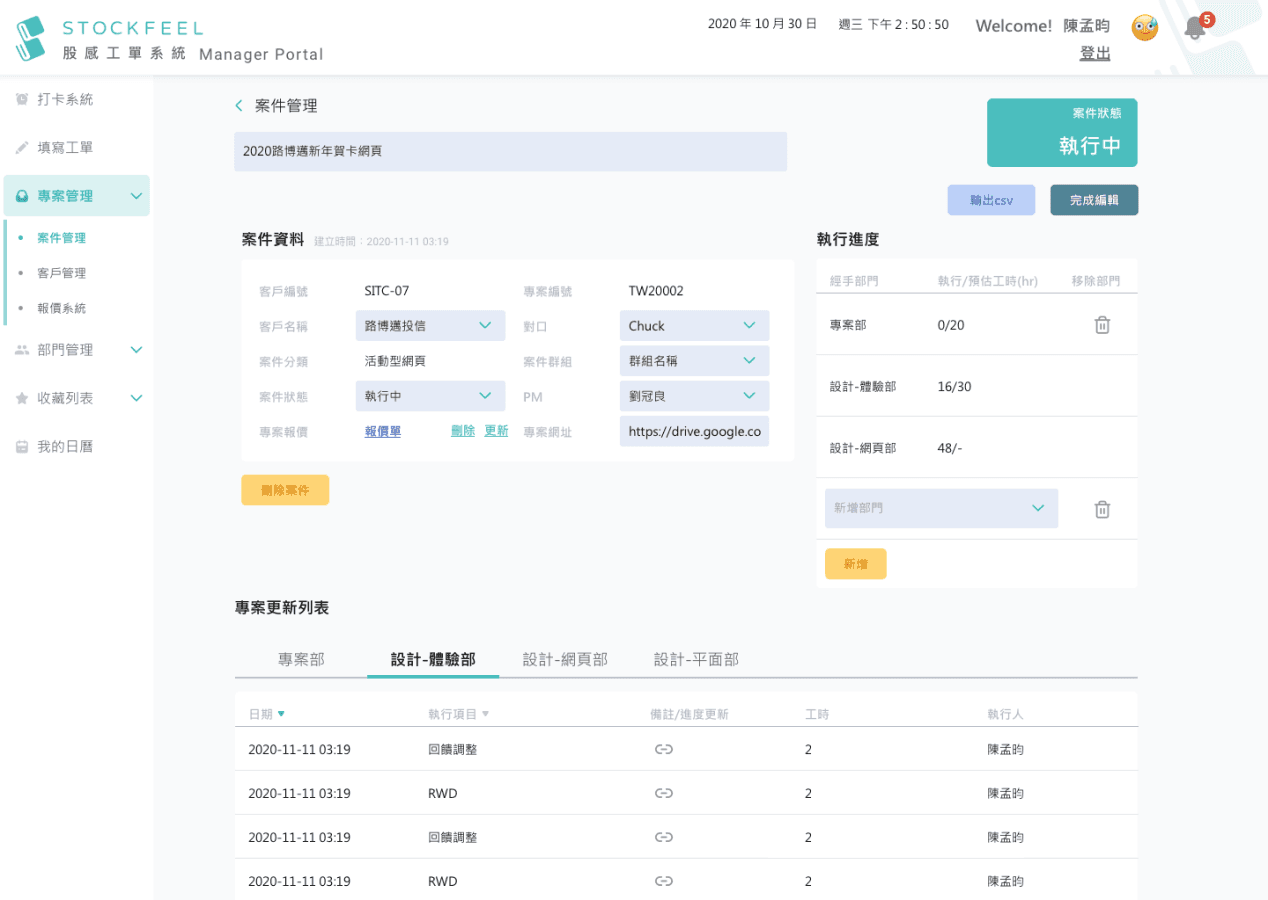
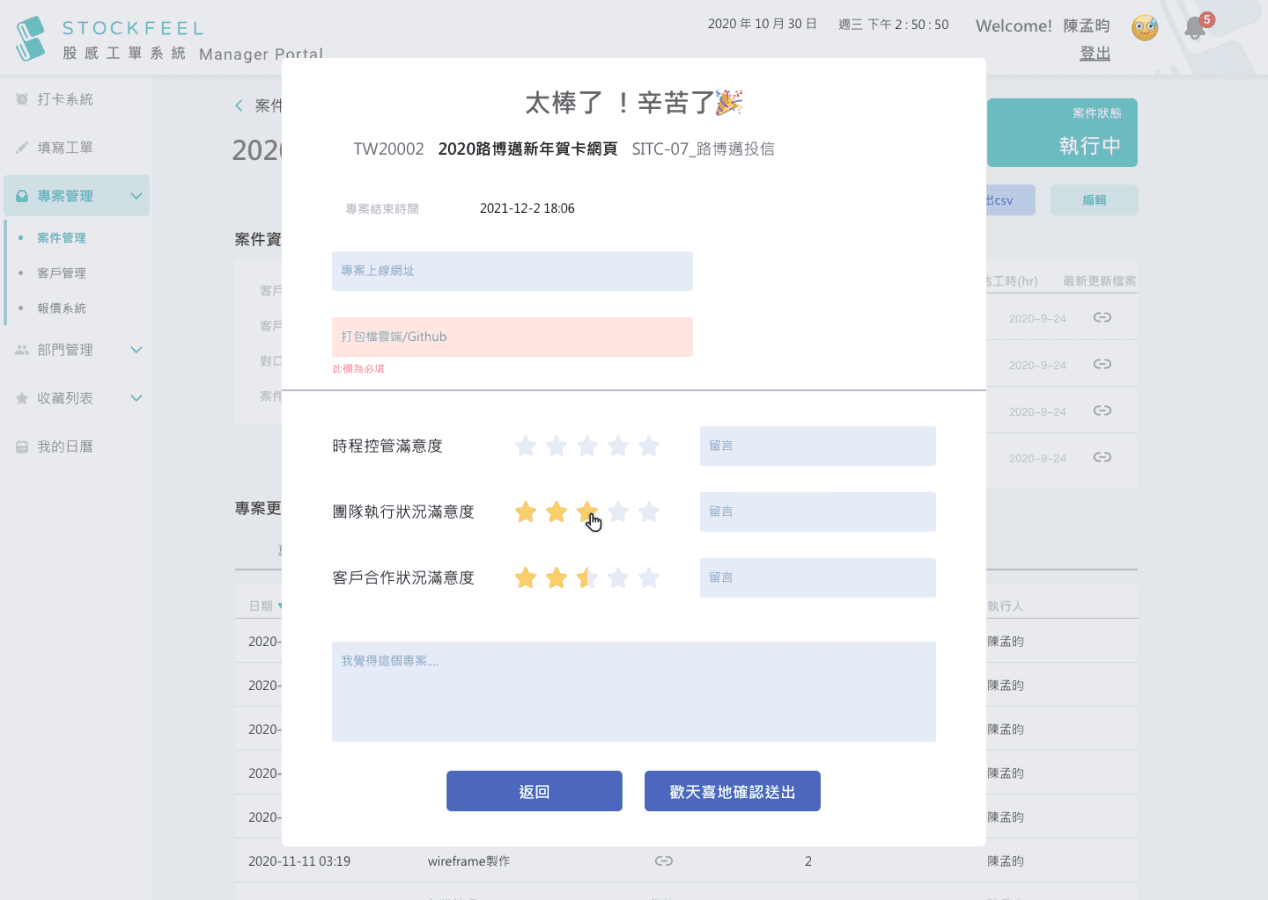
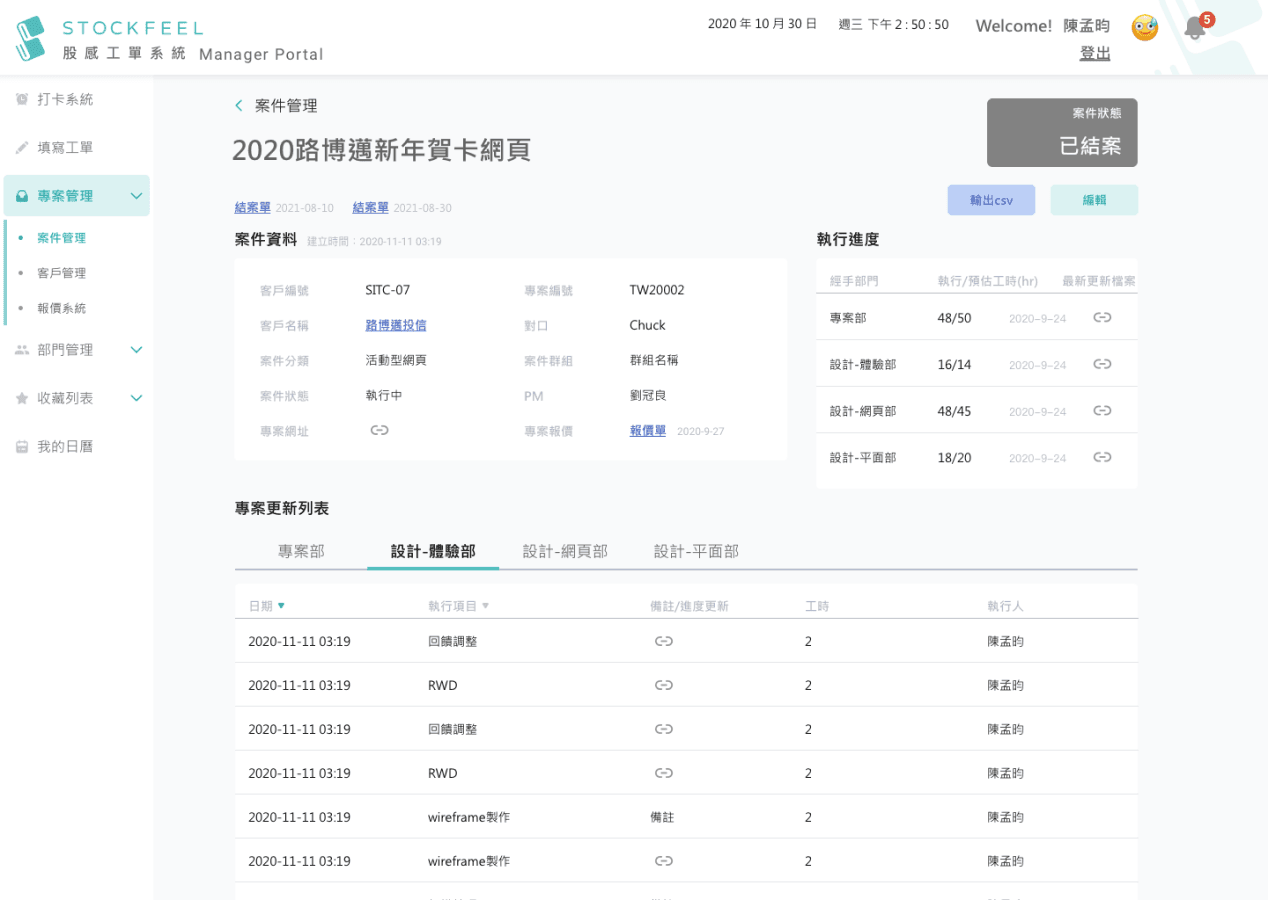
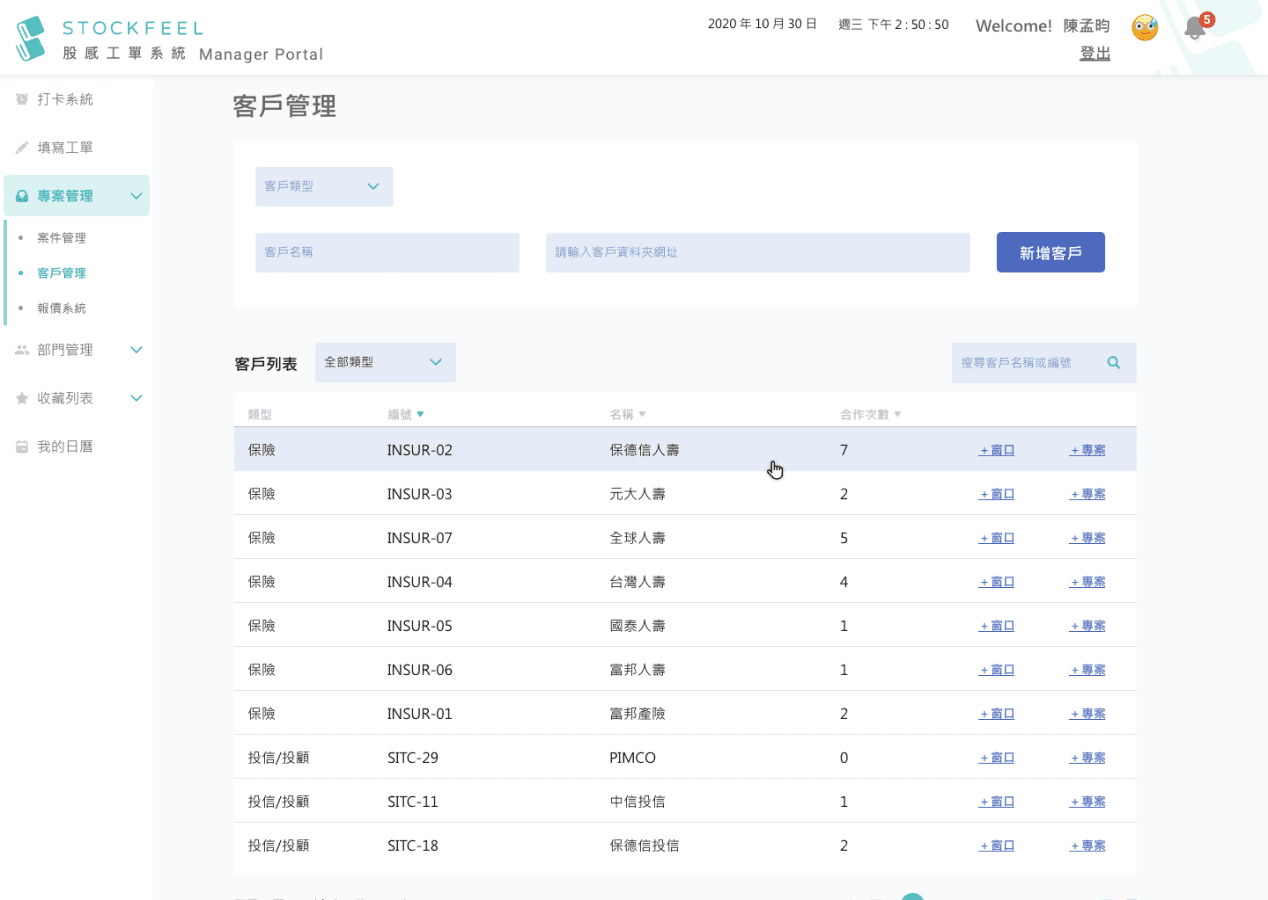
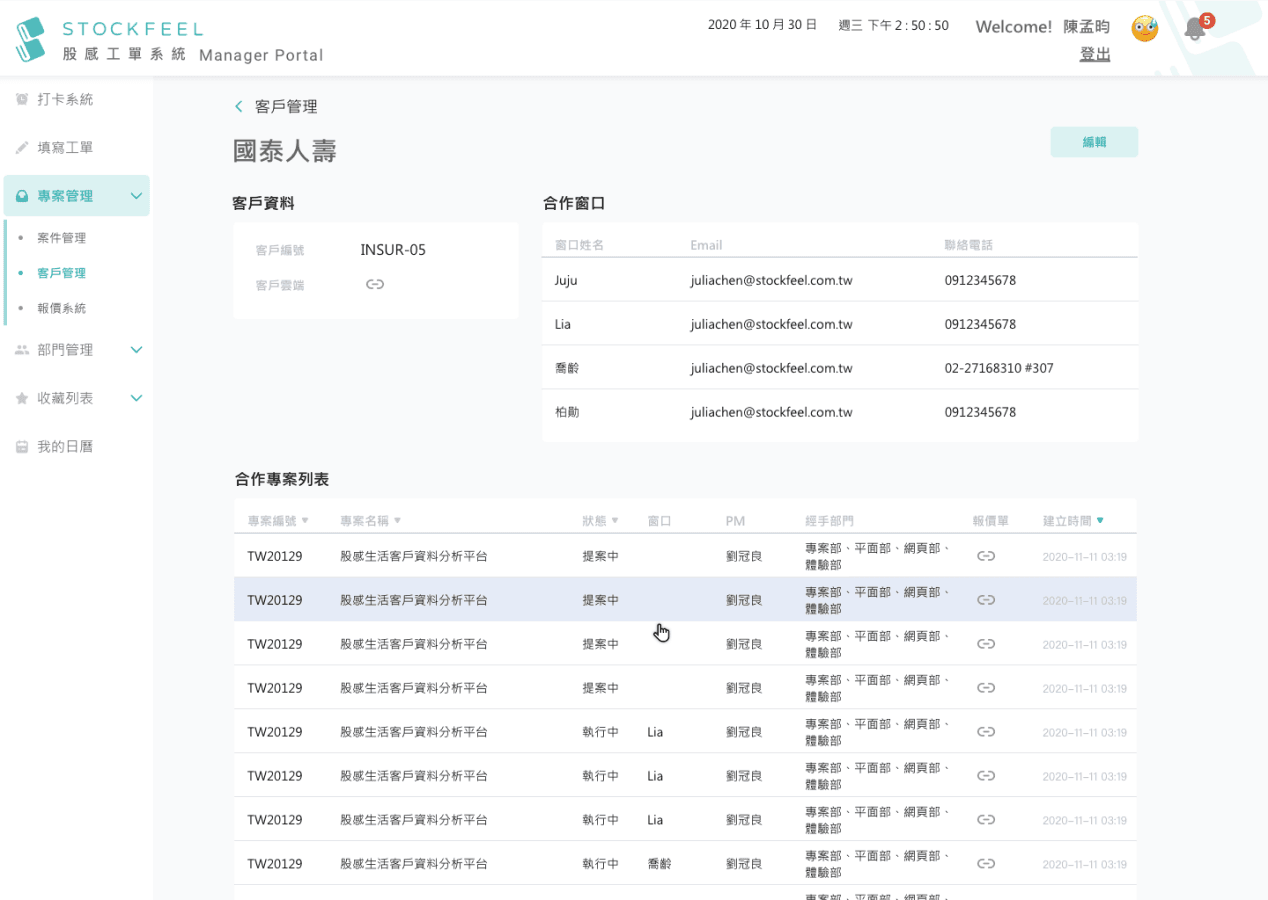
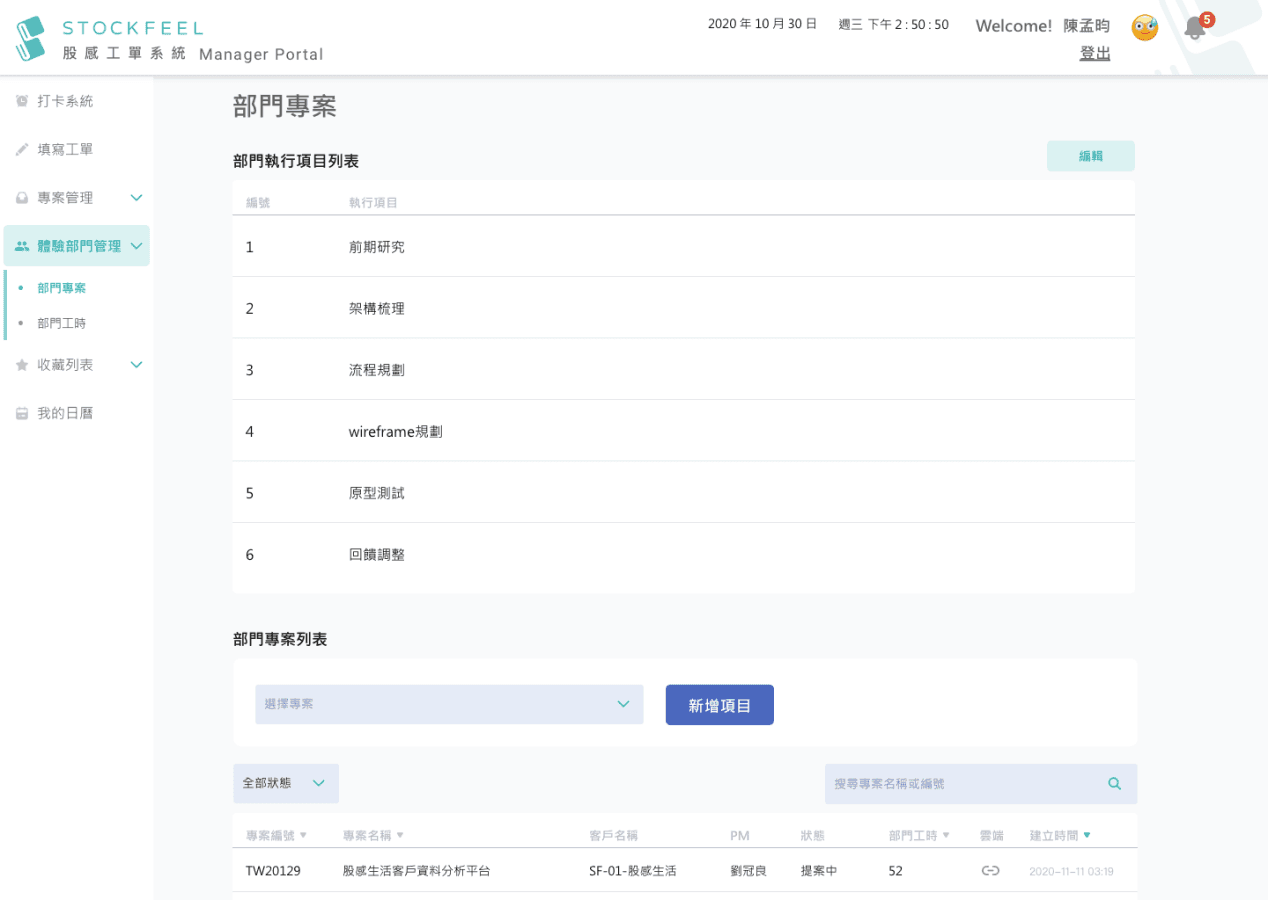
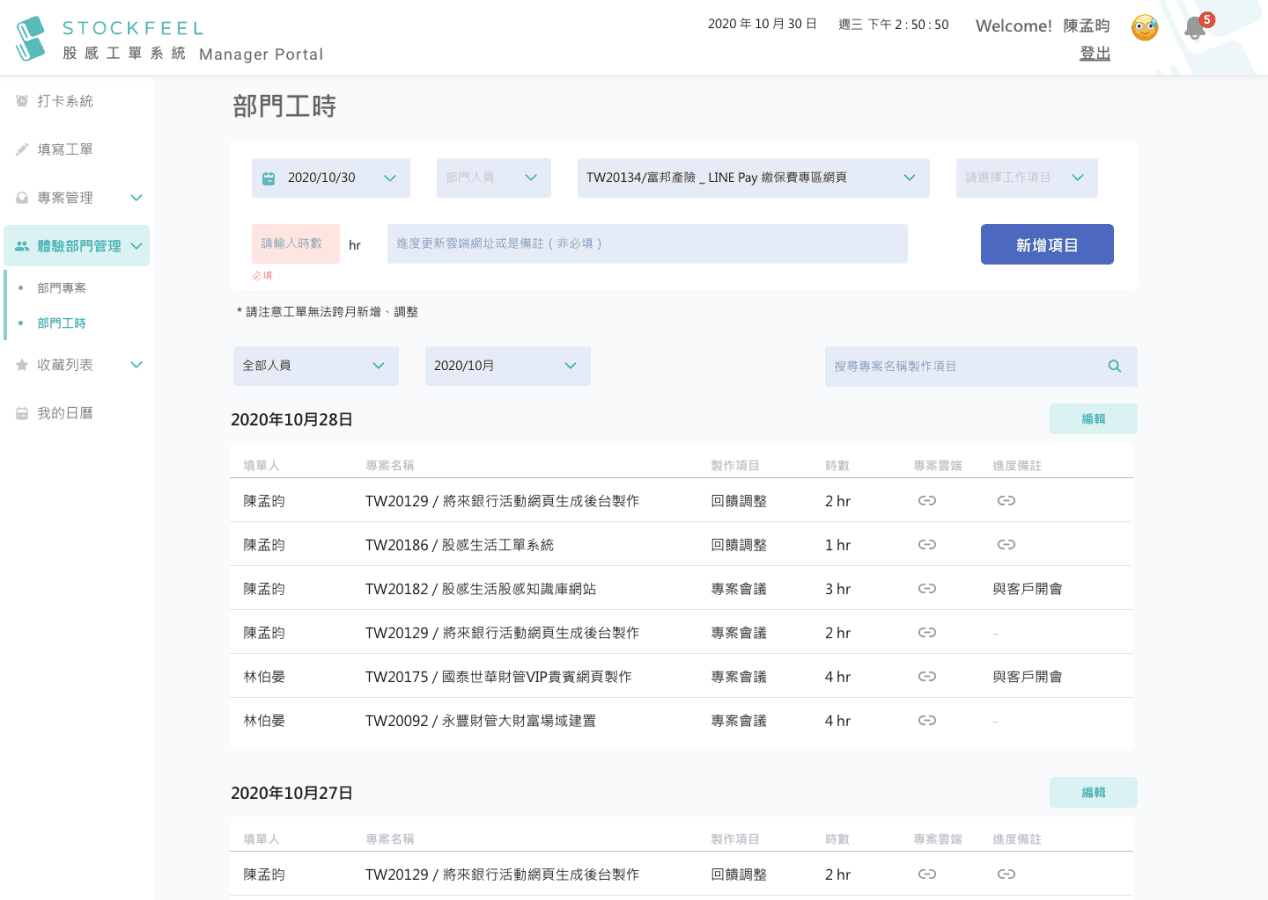
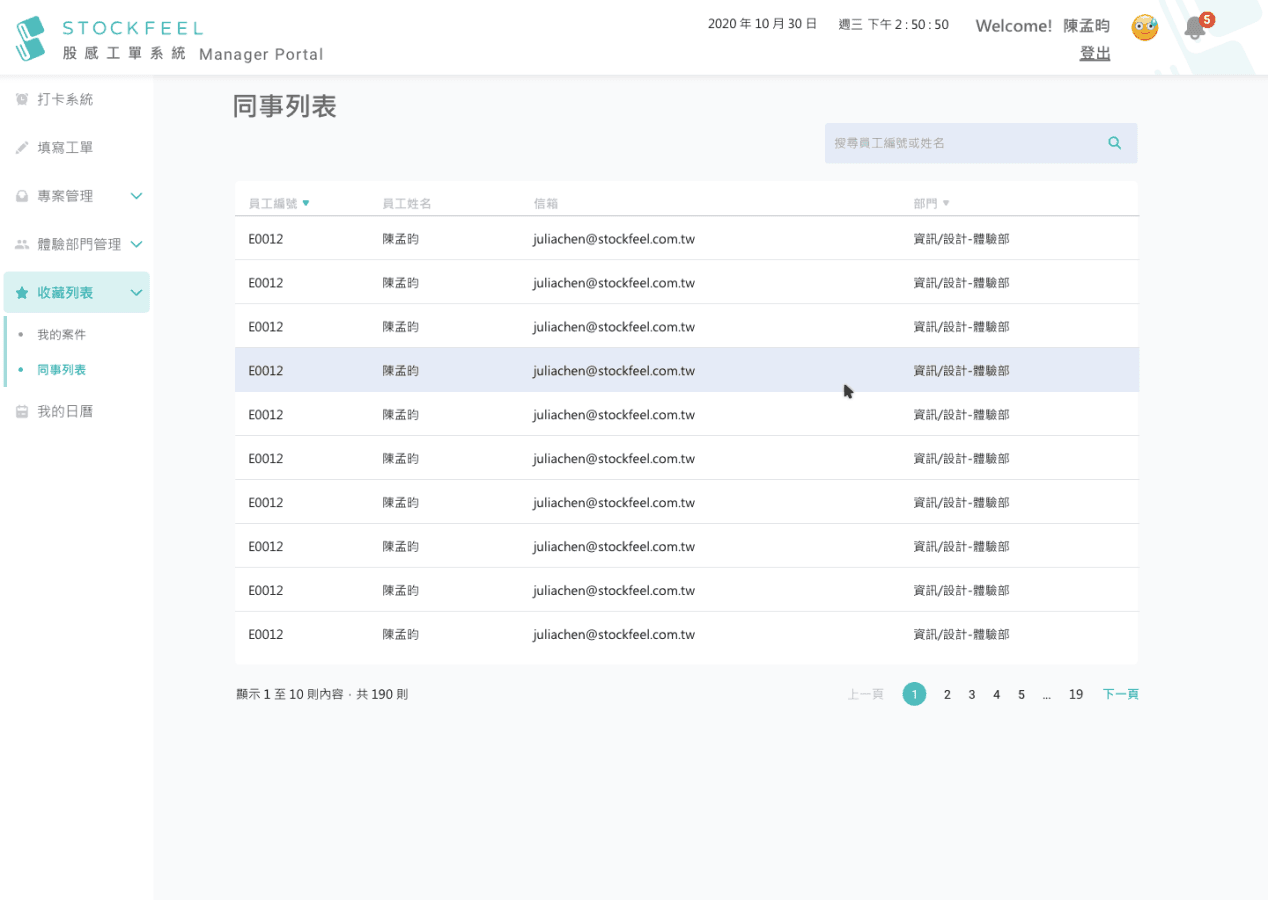
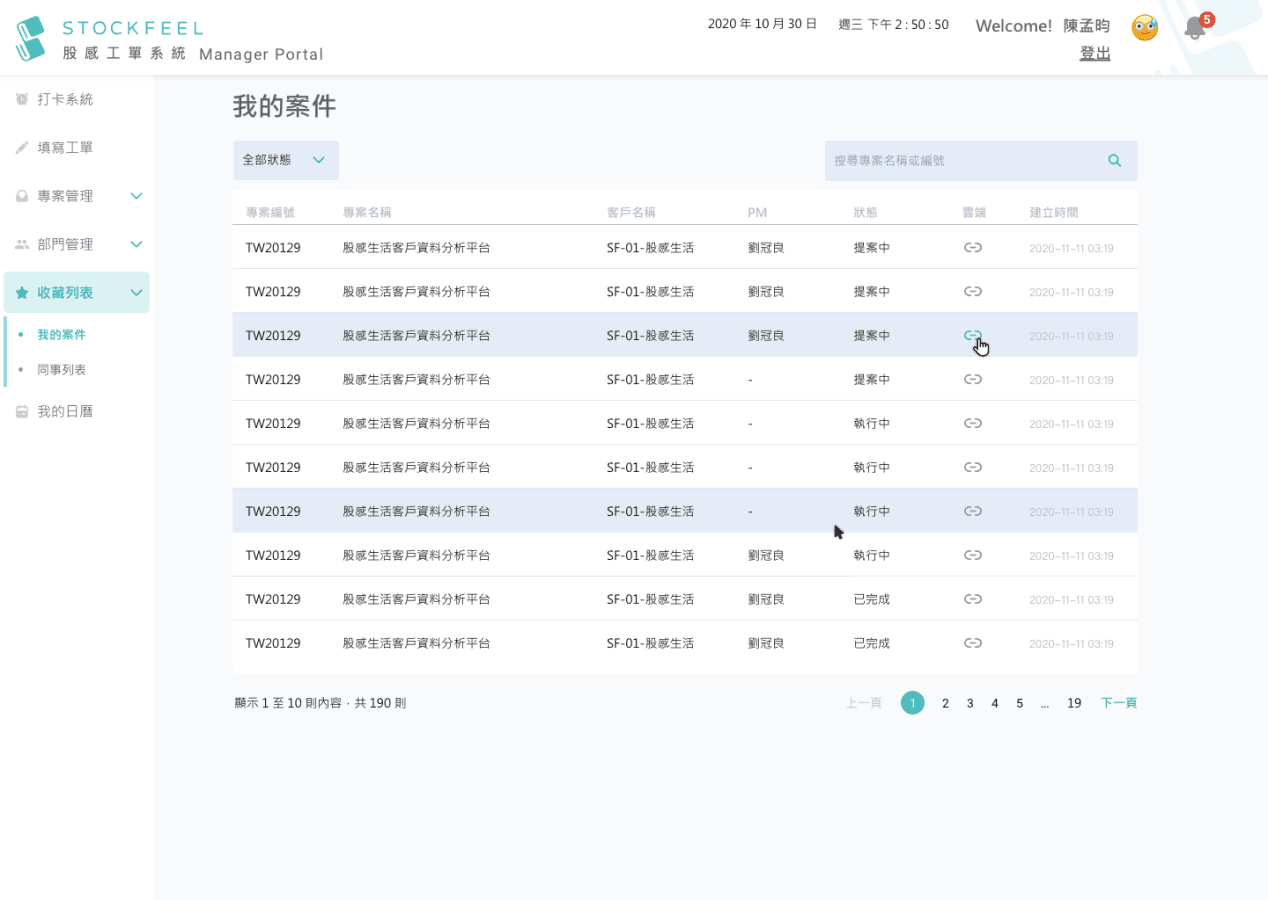
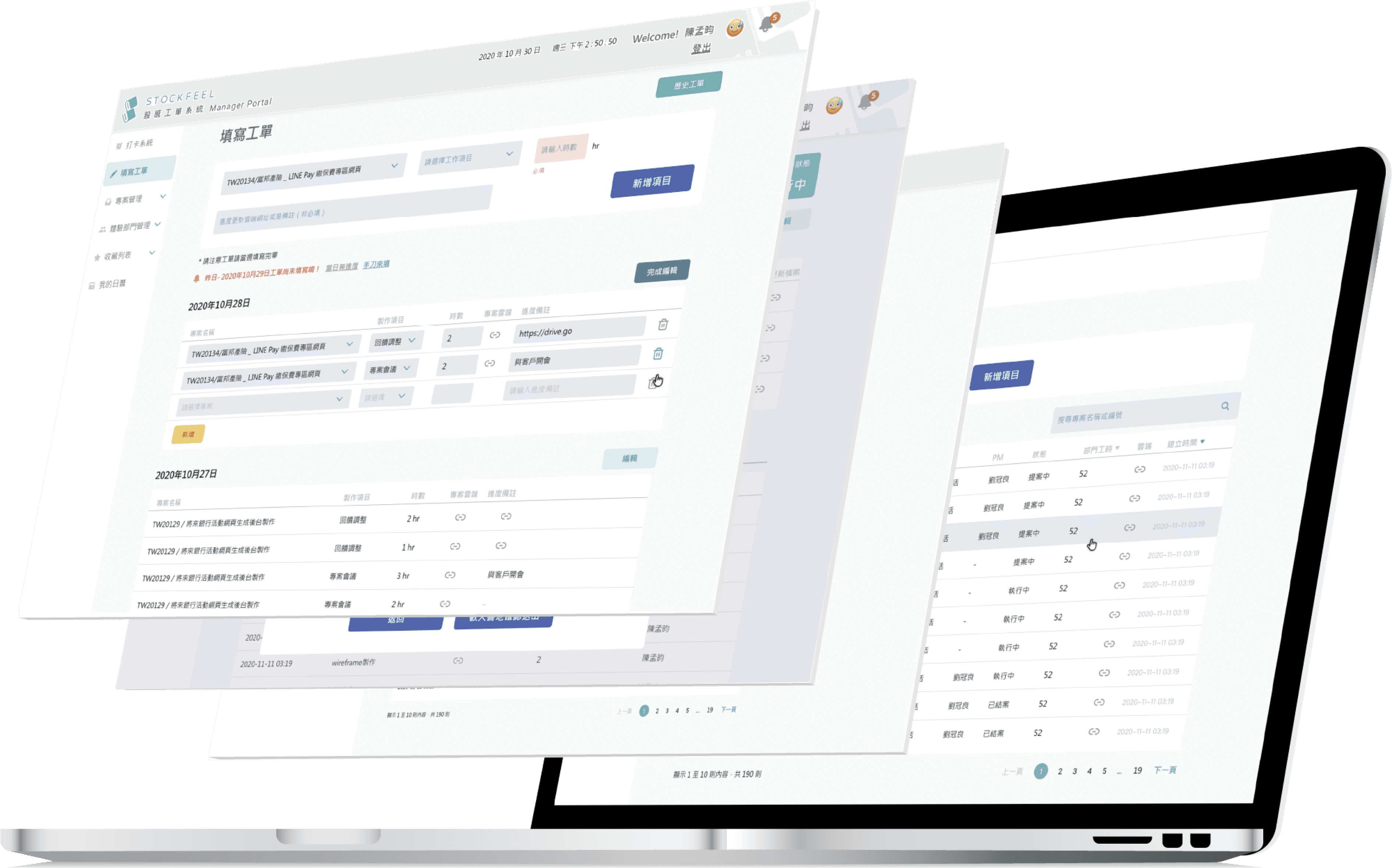

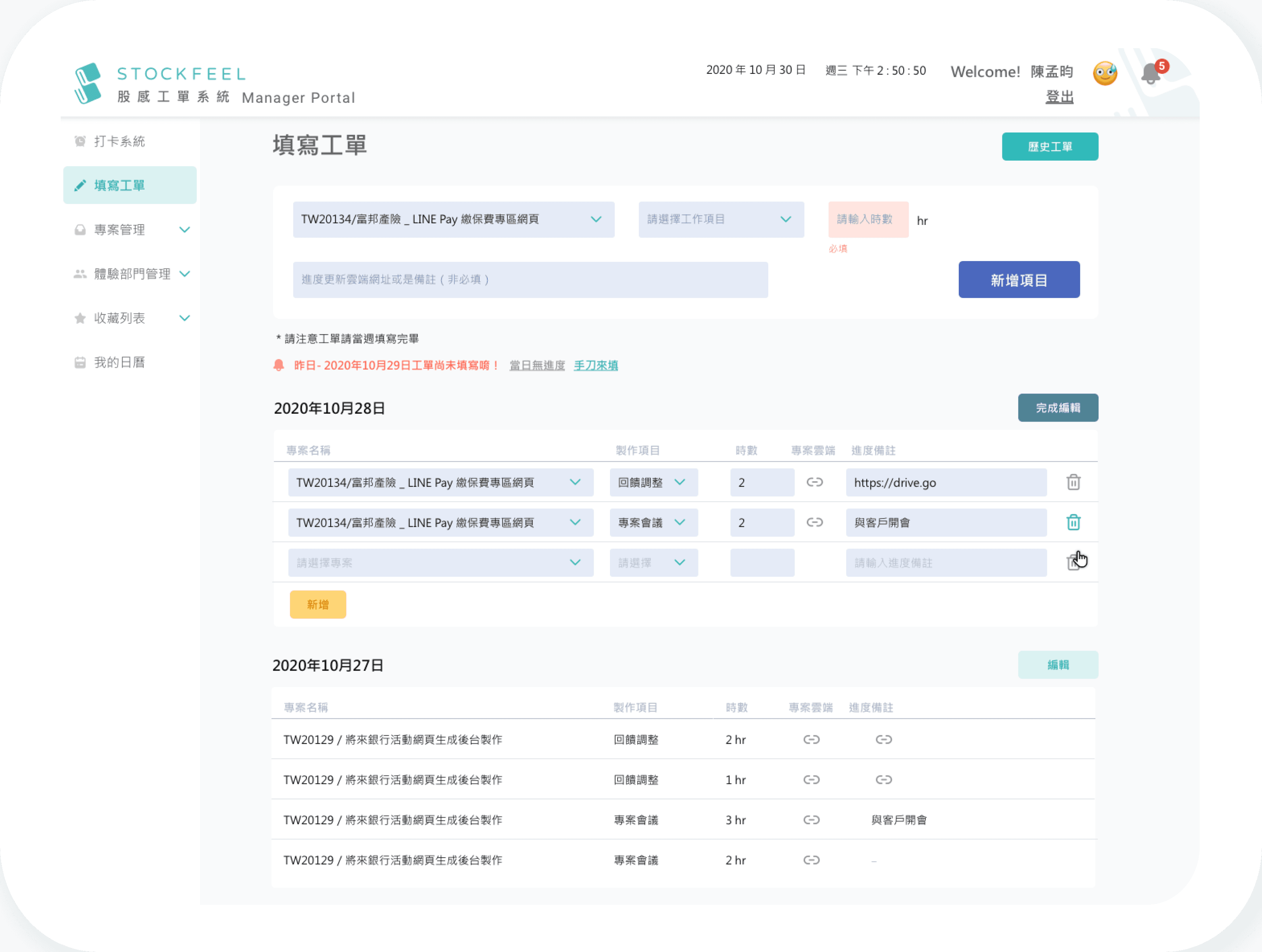
Rating interaction
Different situation of buttons
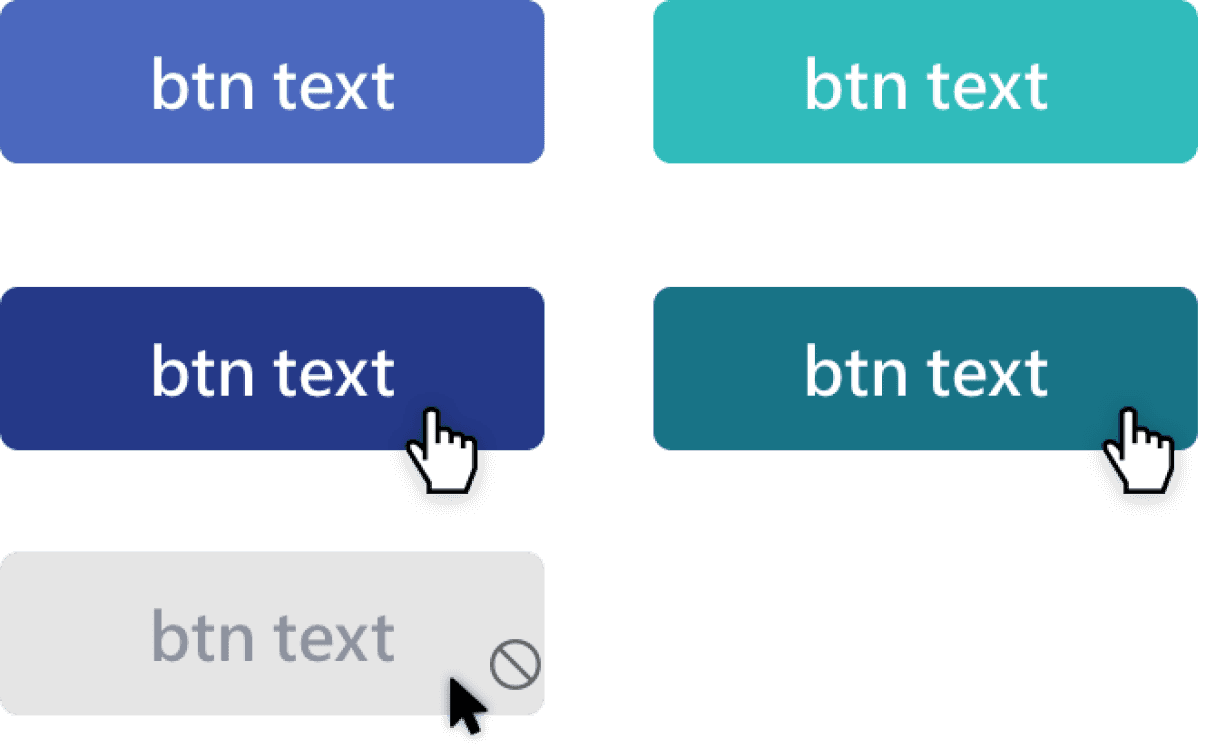
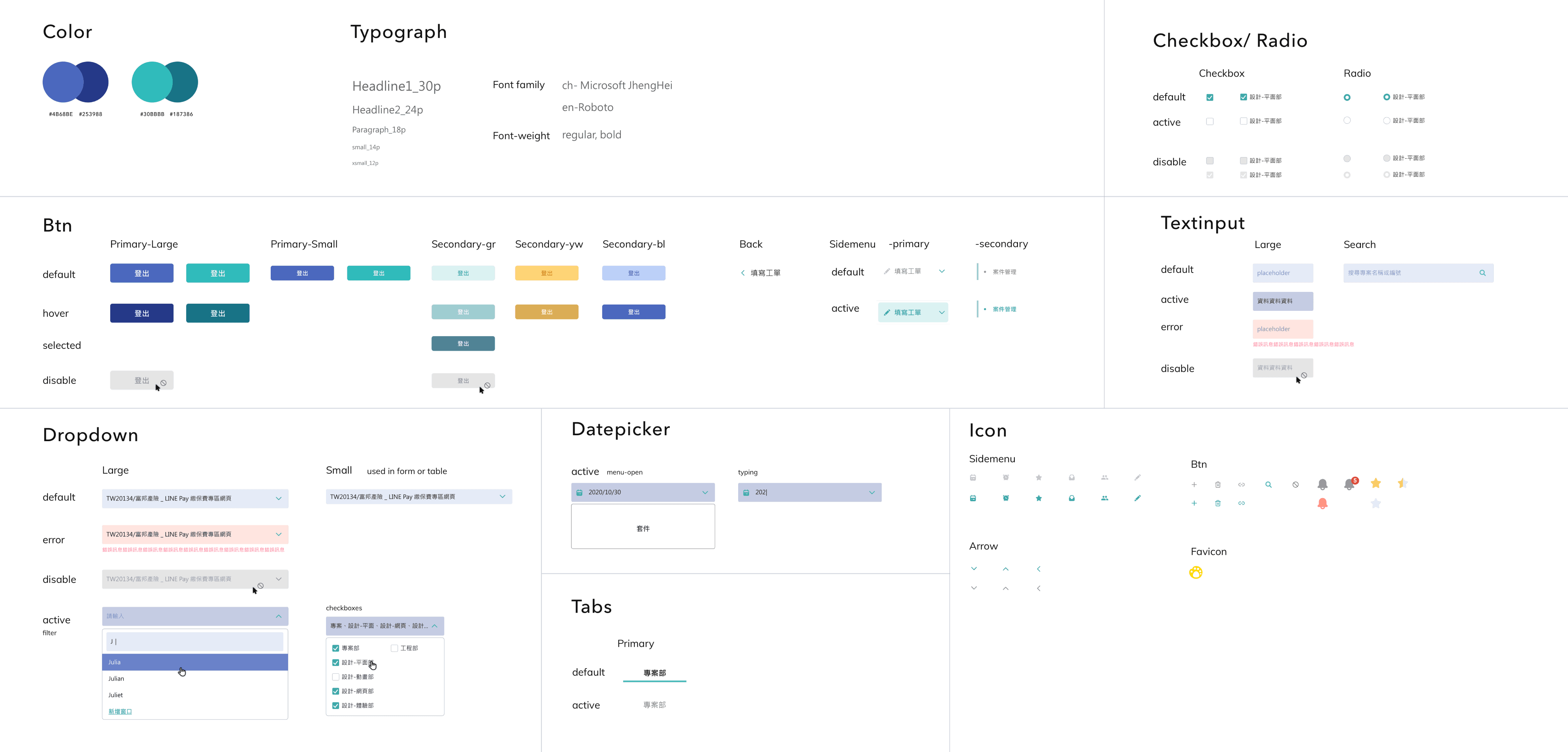
#253988
#187386
#30BBBB
#4B68BE
Main Color
Typography
regular, bold
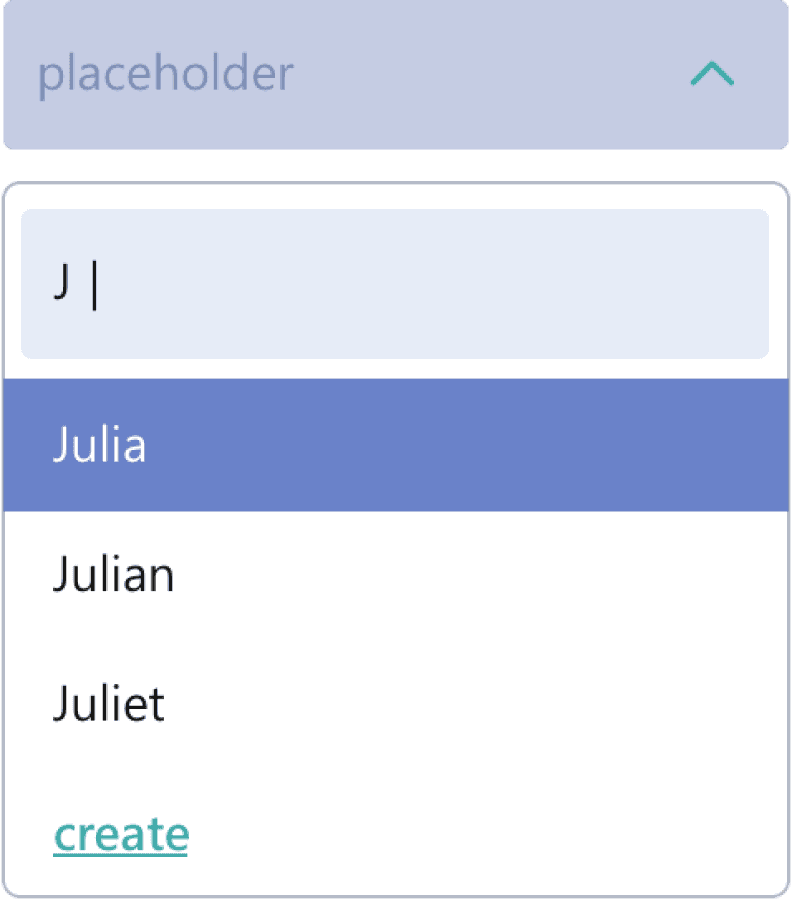
Dropdown with filter and btn
regular, bold
Aa
字體
Roboto font-family
Microsoft-Microsoft JhengHei
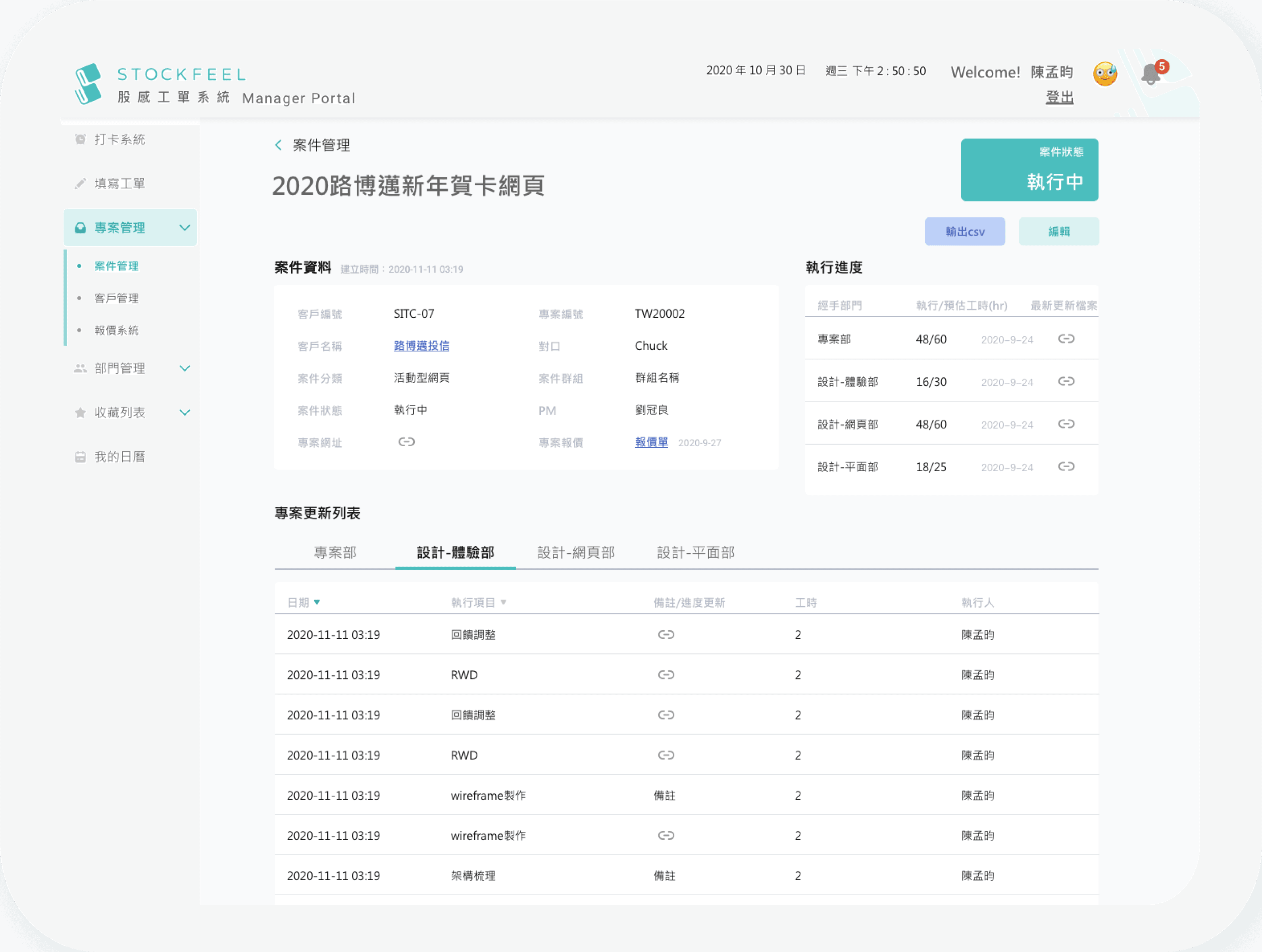
Different progress marks of project





* The interface is currently available in Traditional Chinese only.

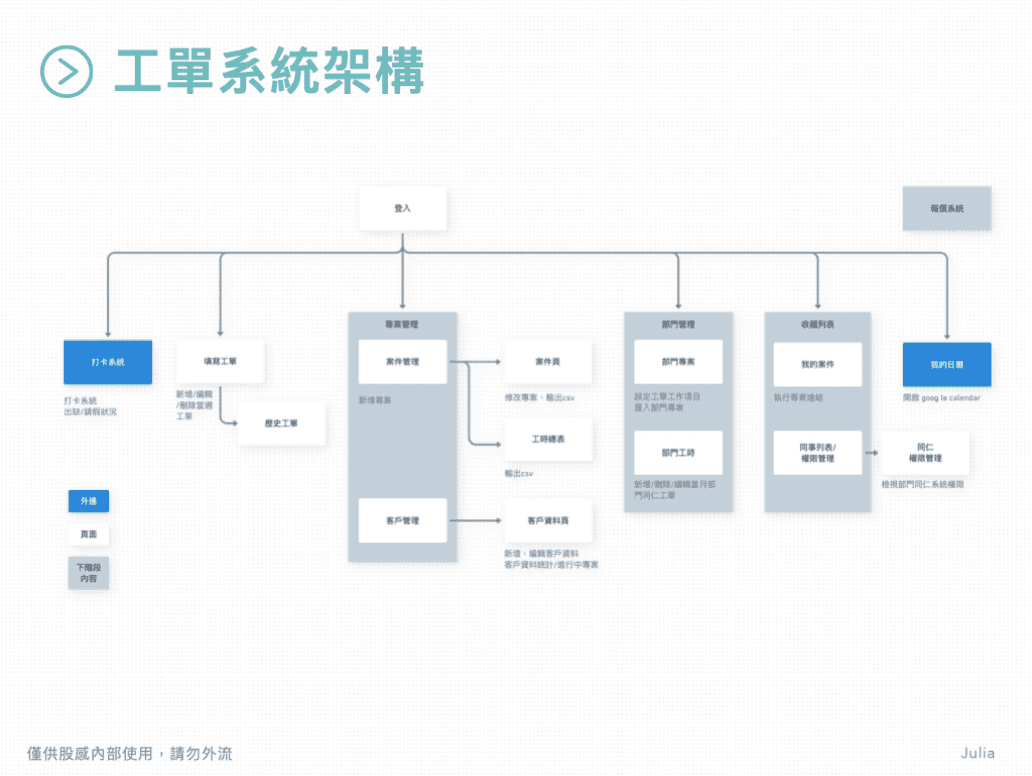
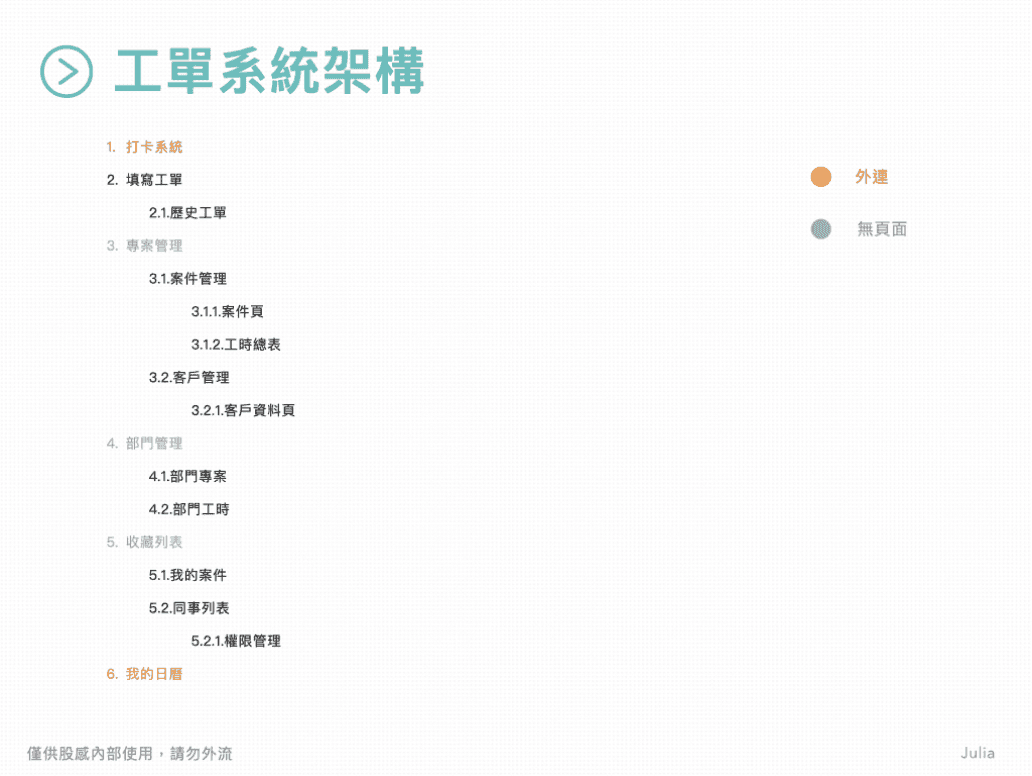
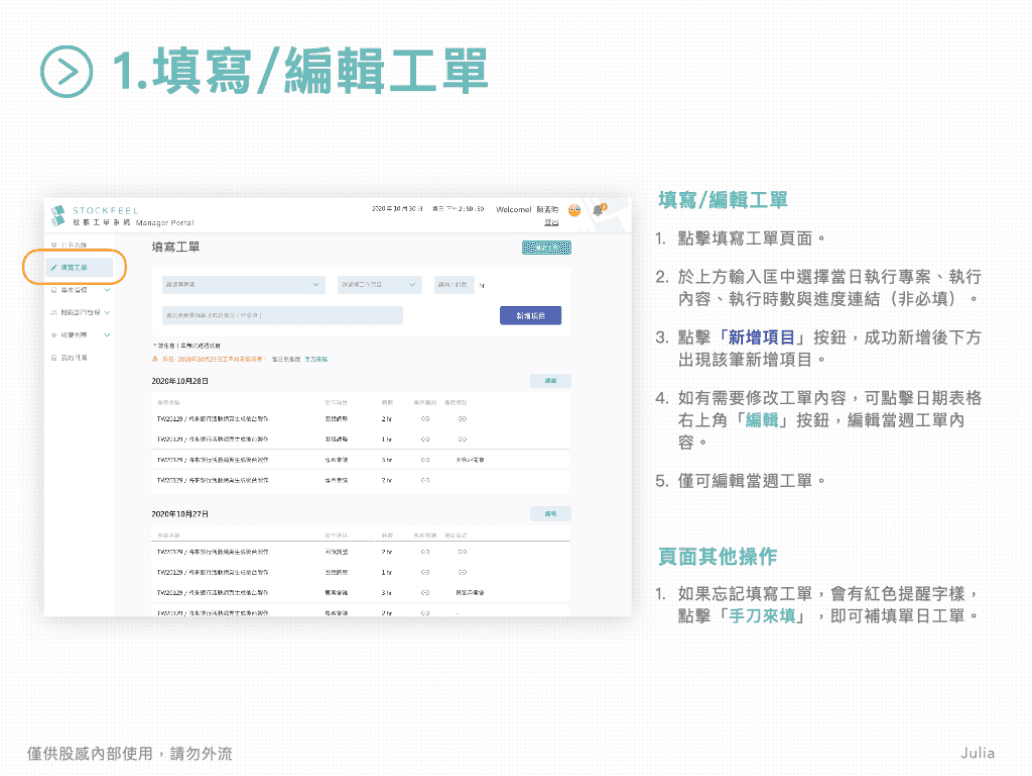
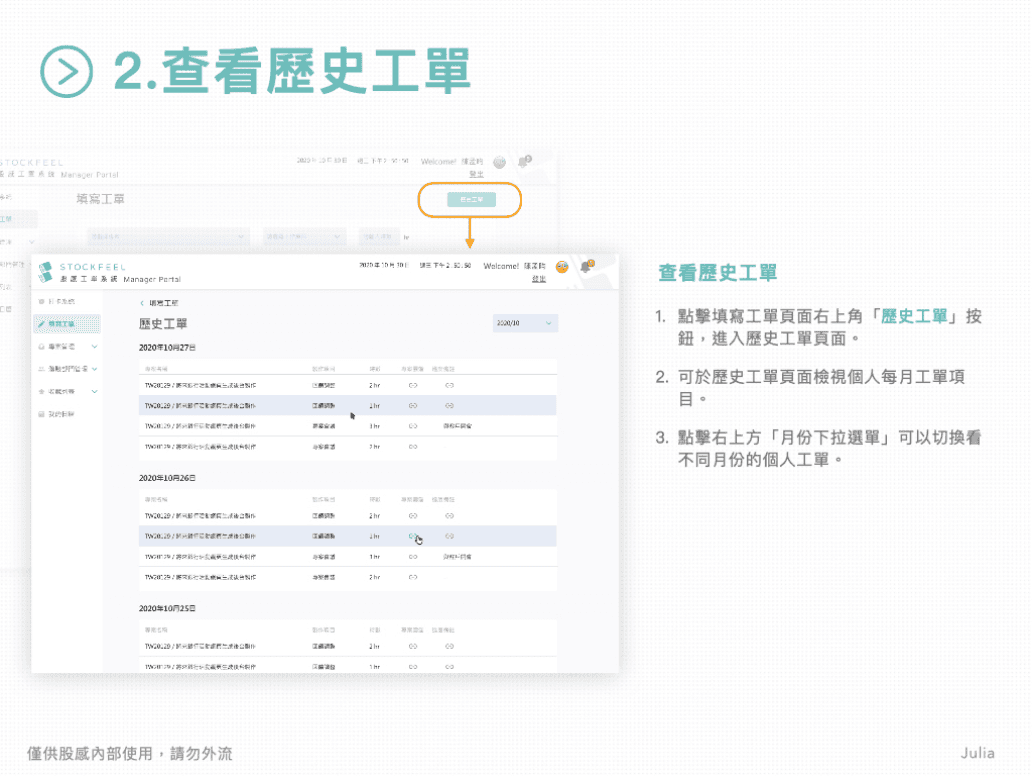
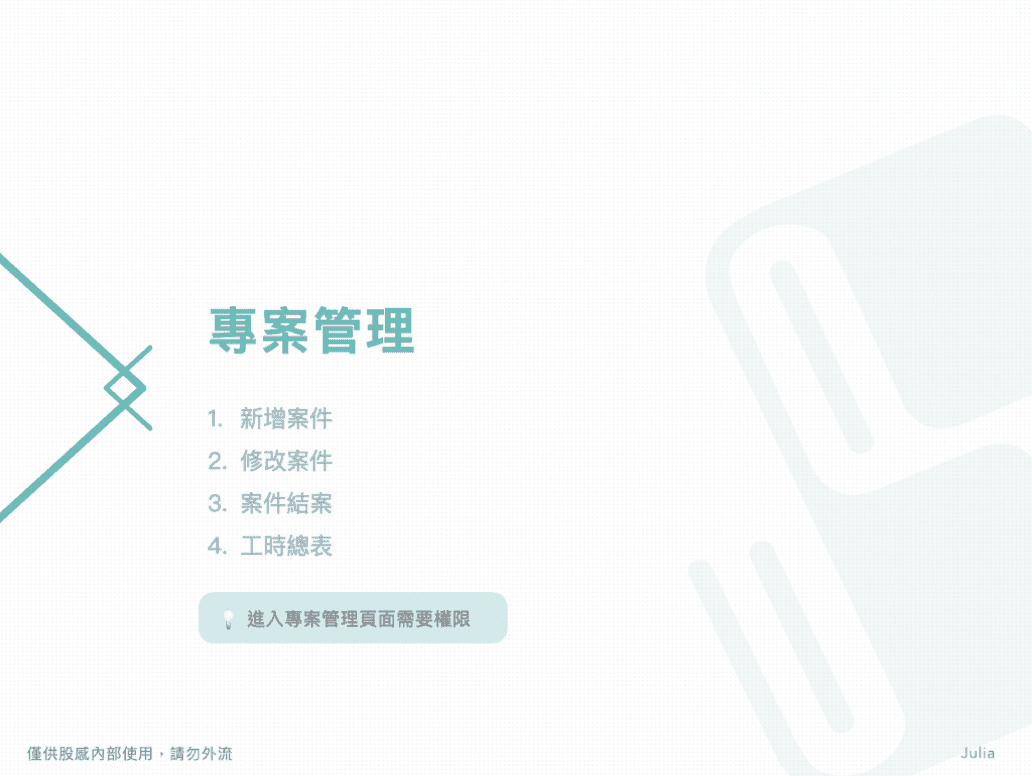
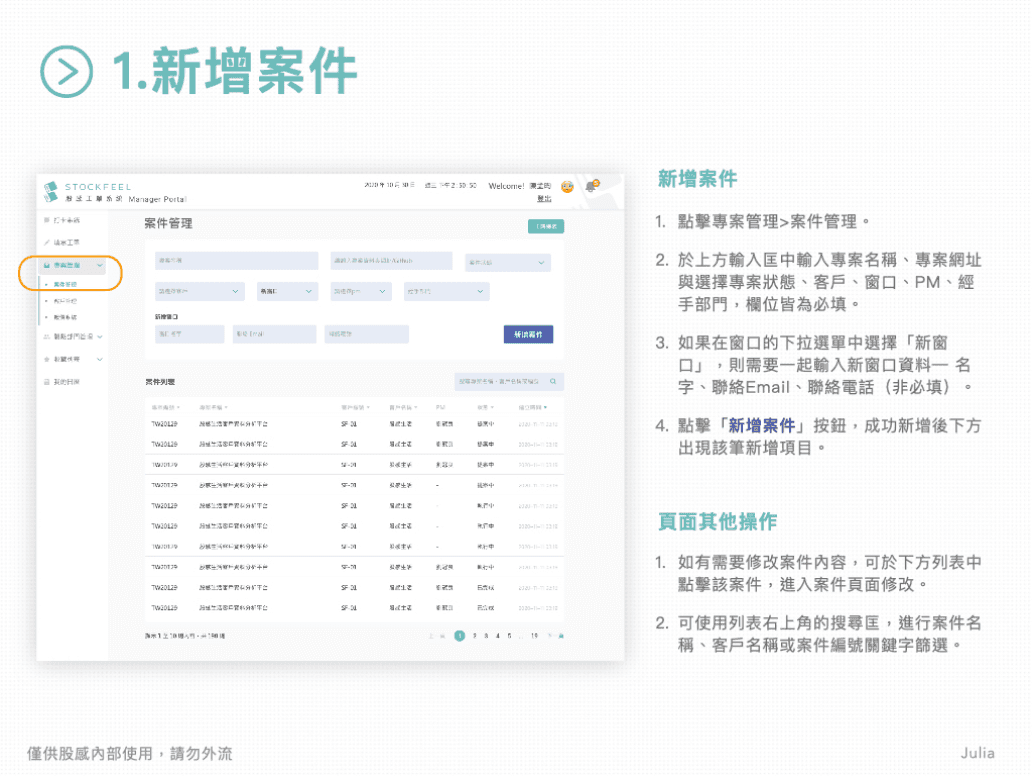
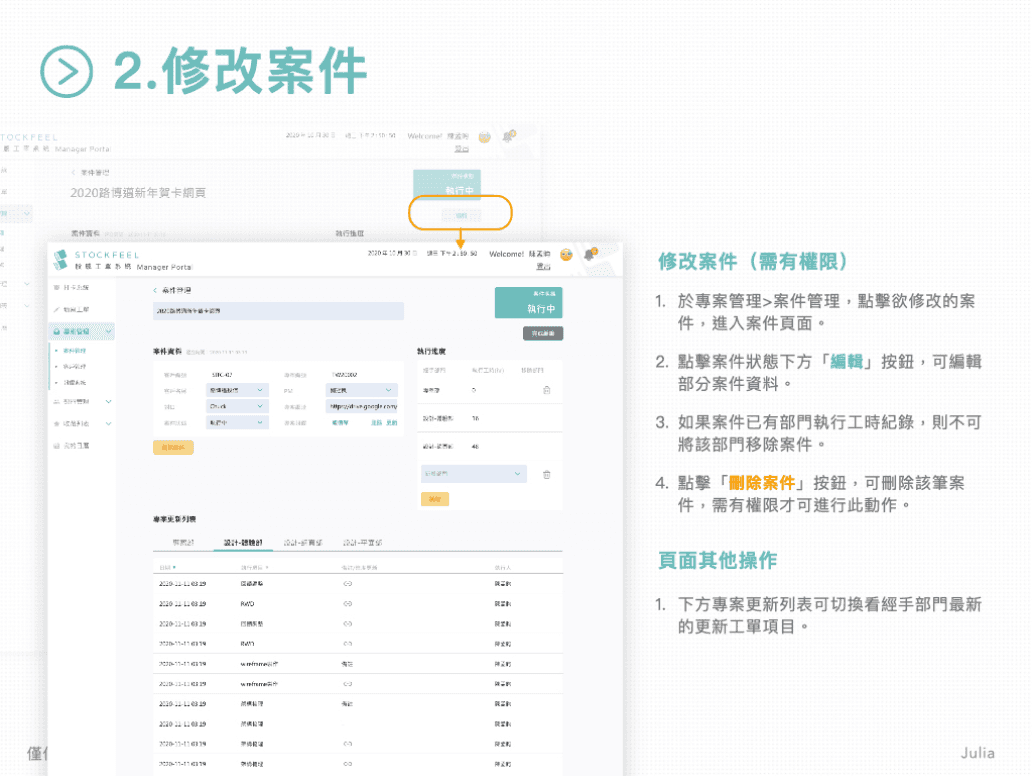
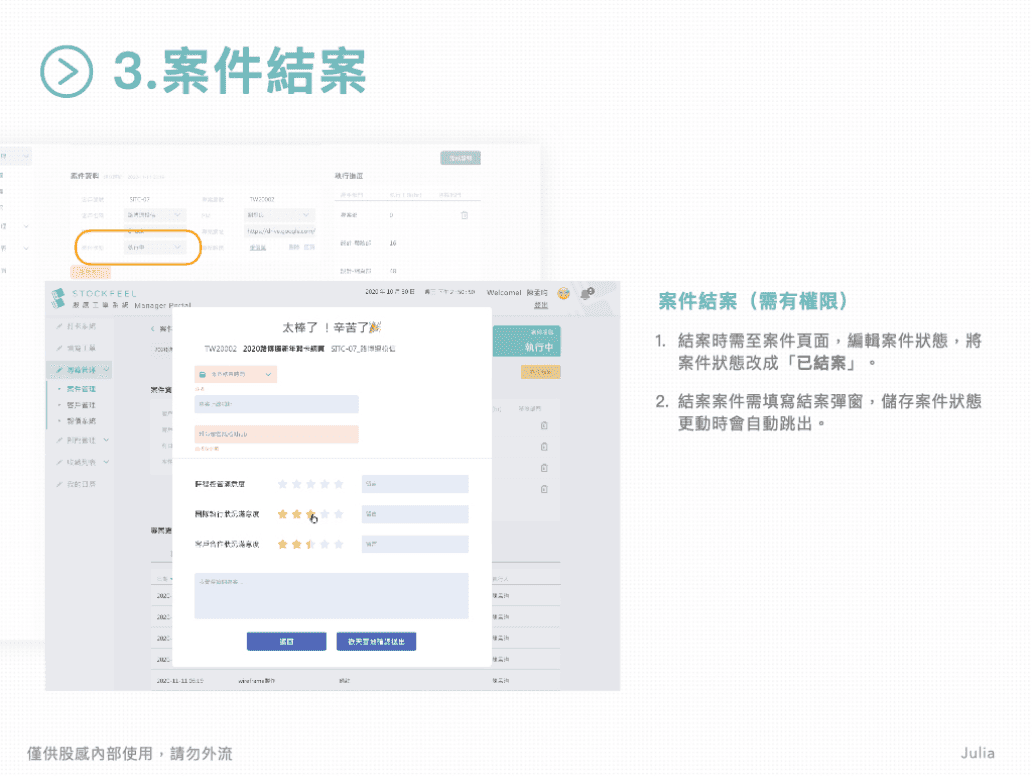
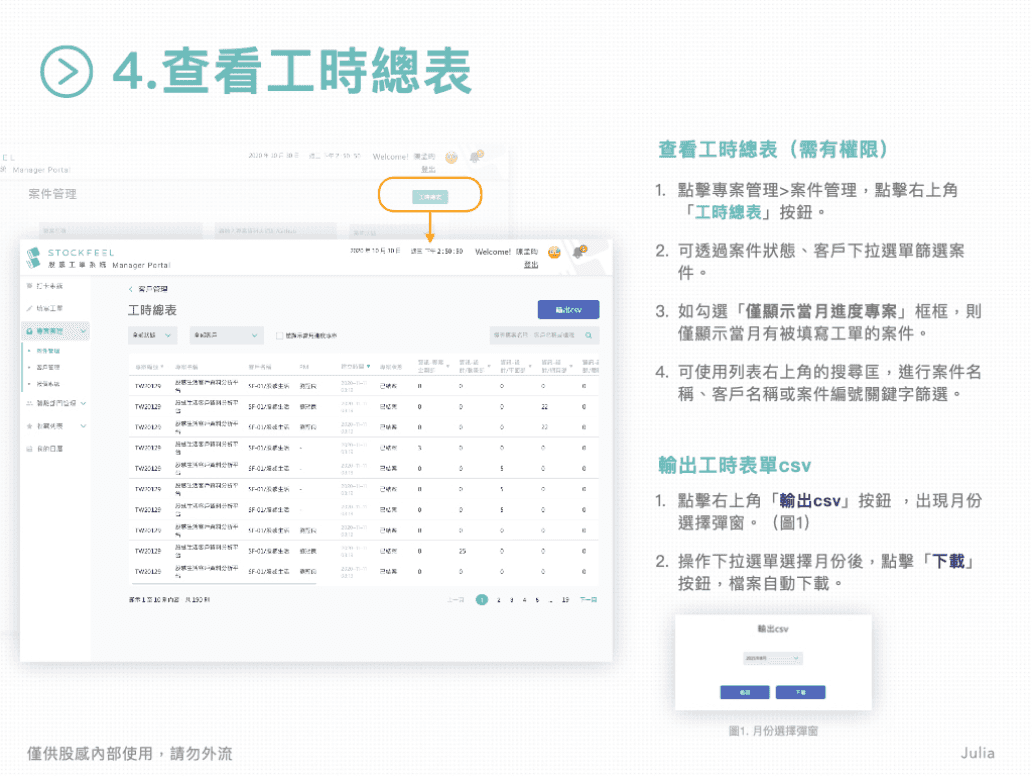
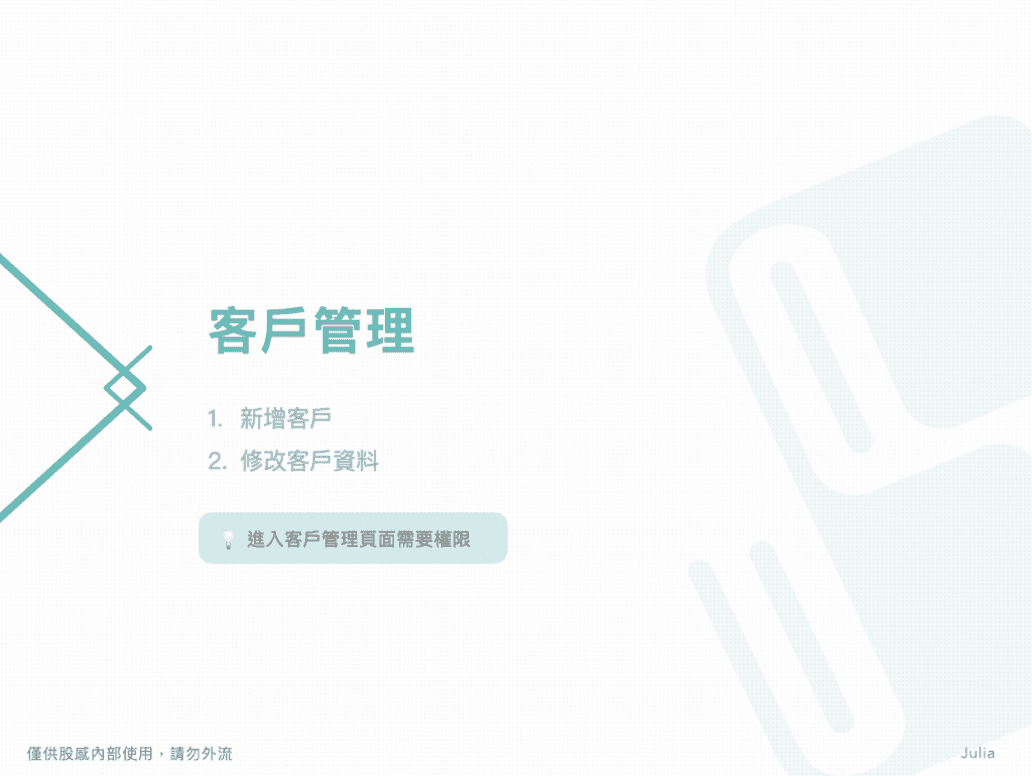
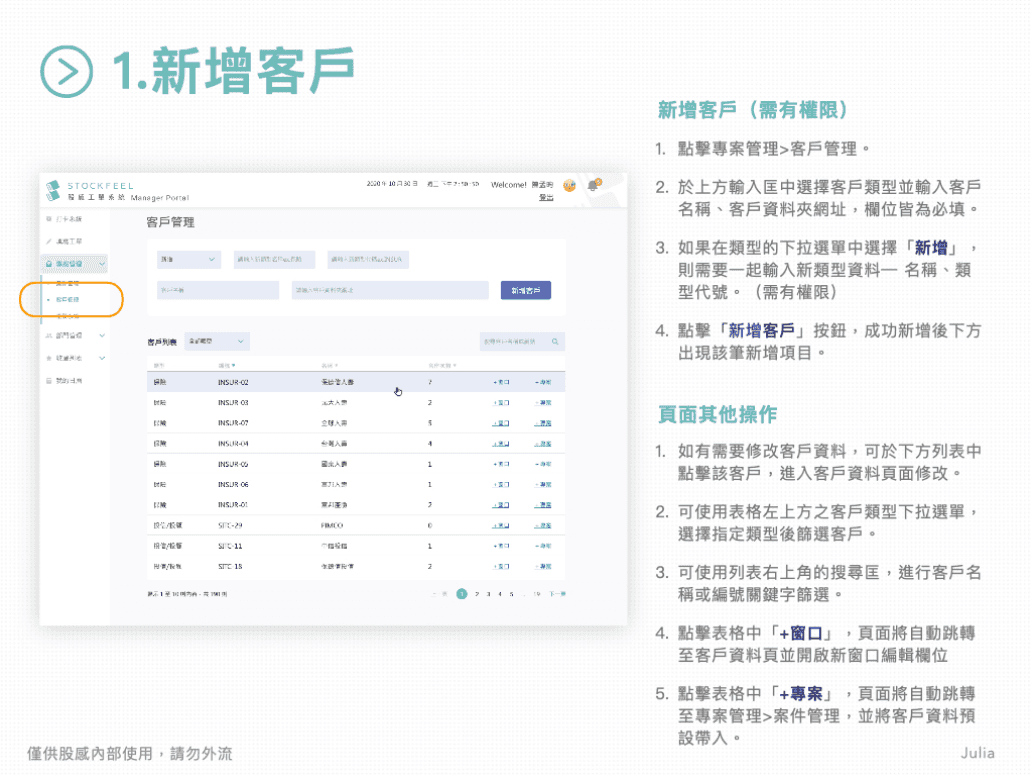
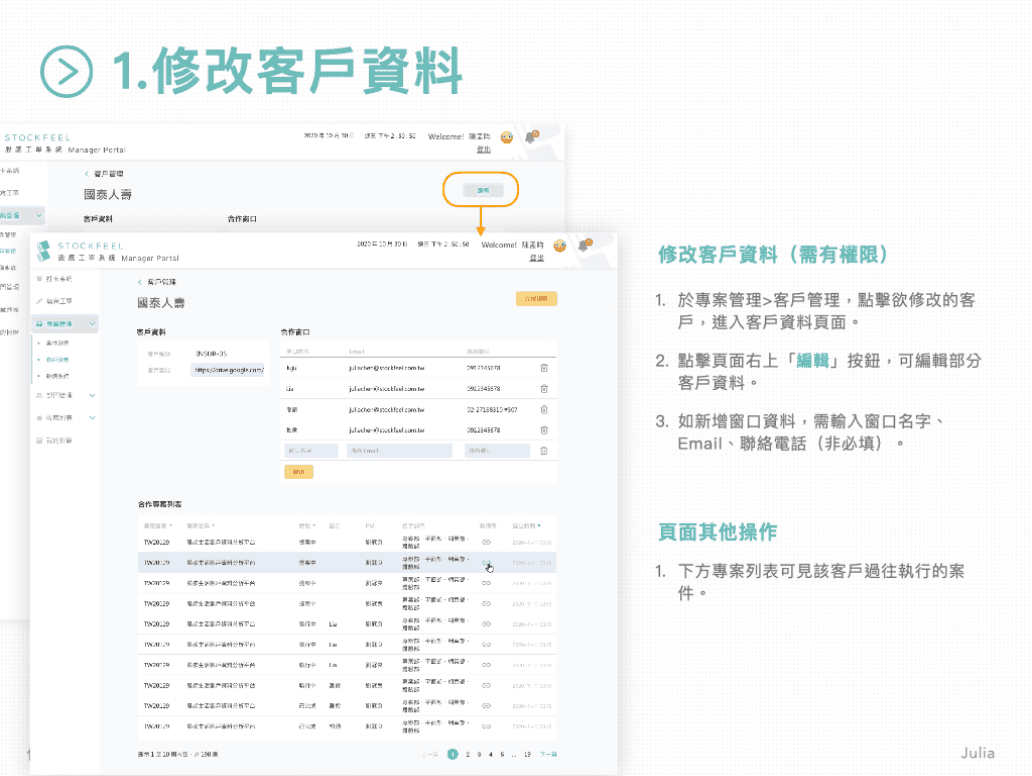
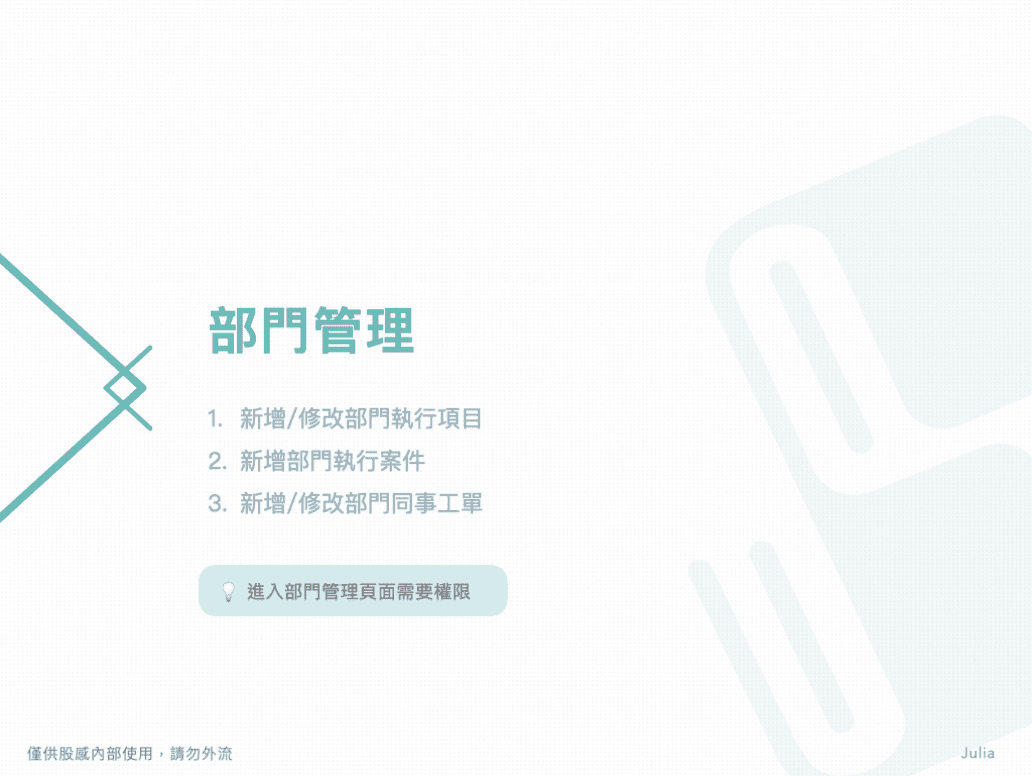
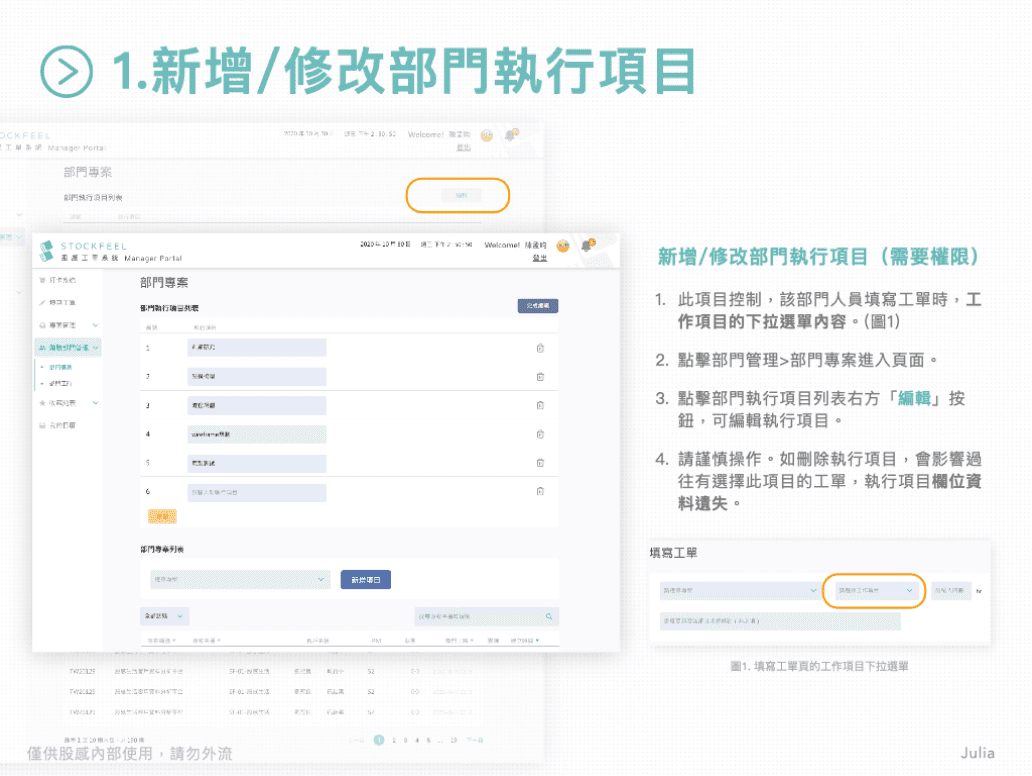
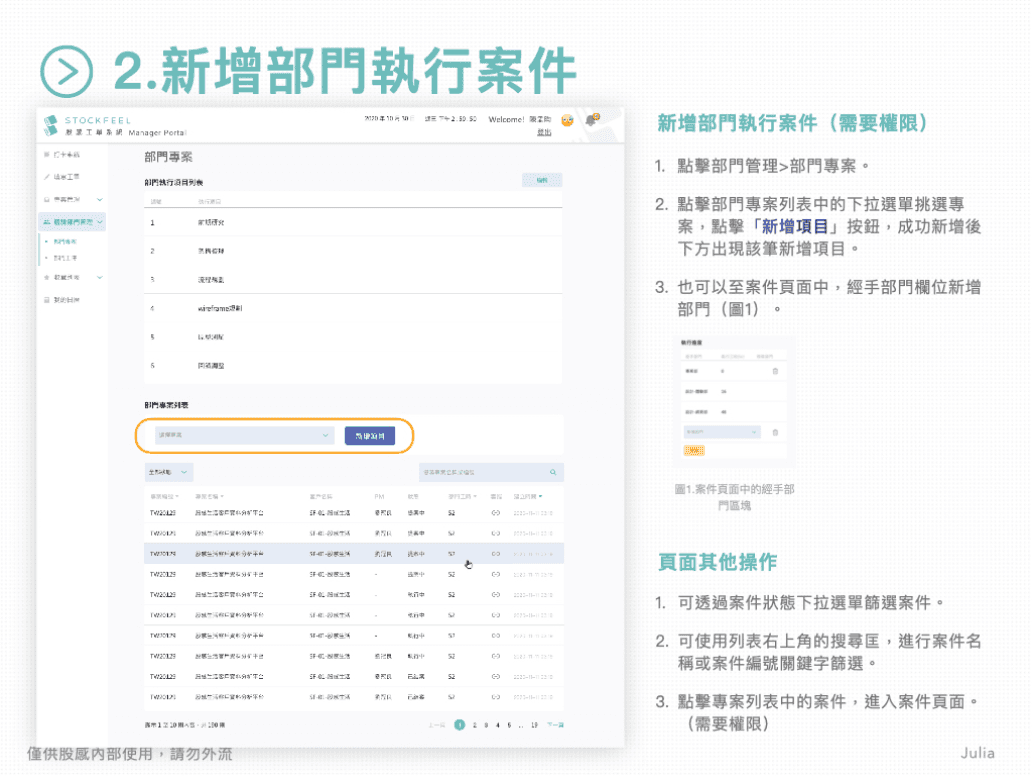
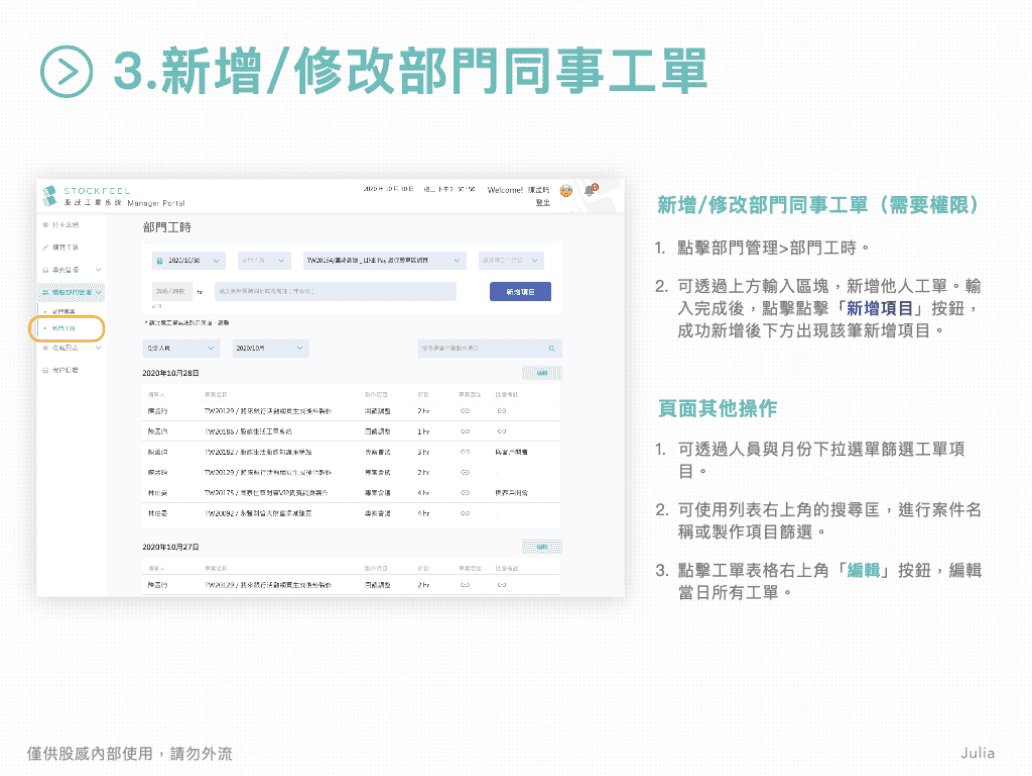
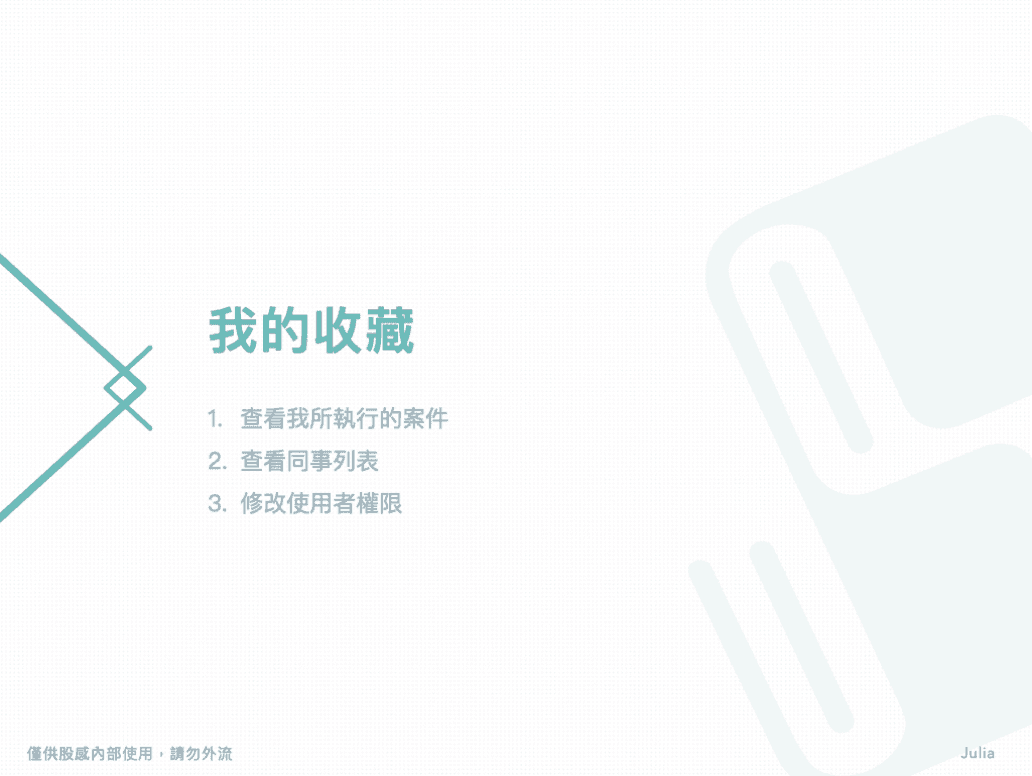
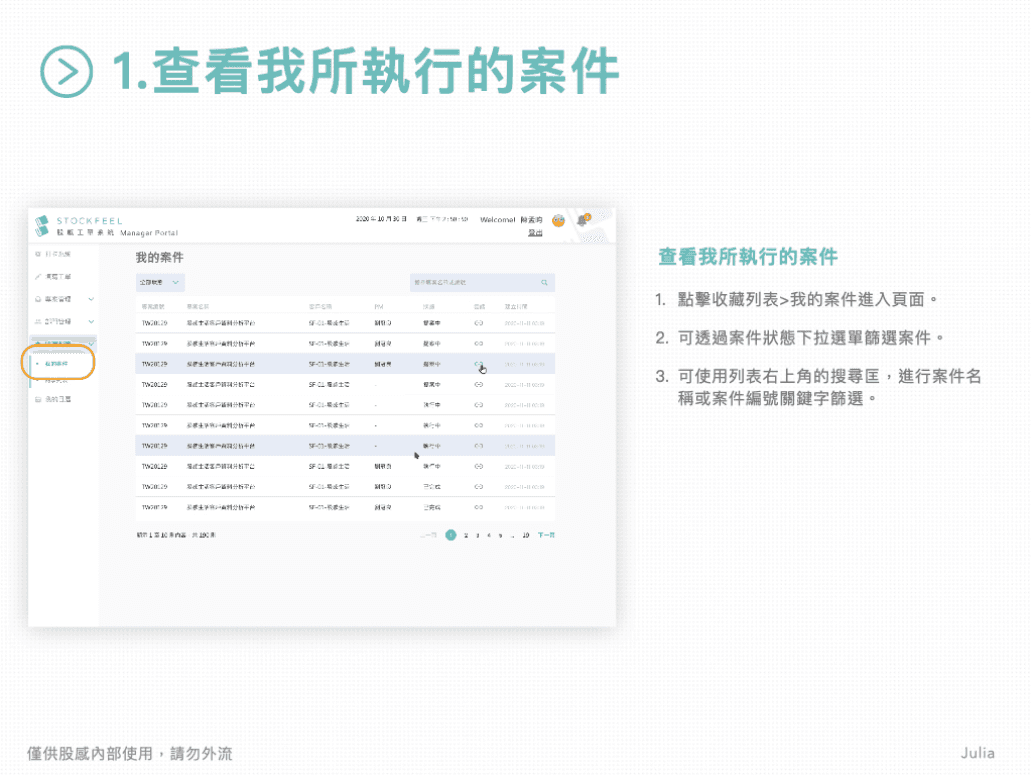
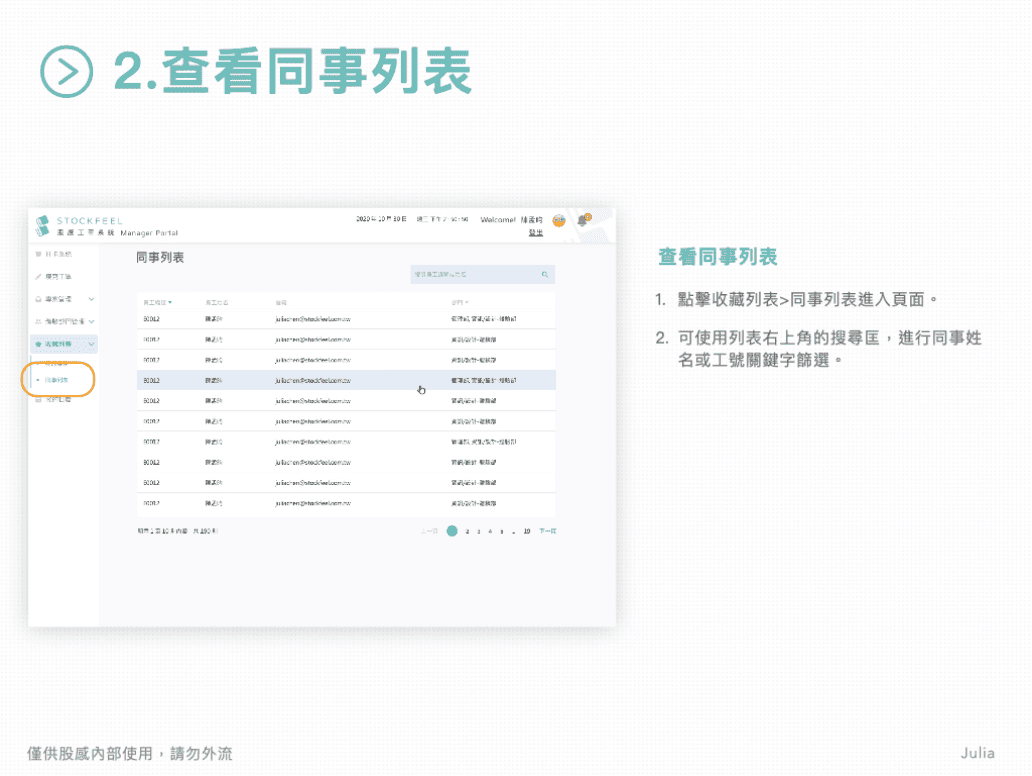
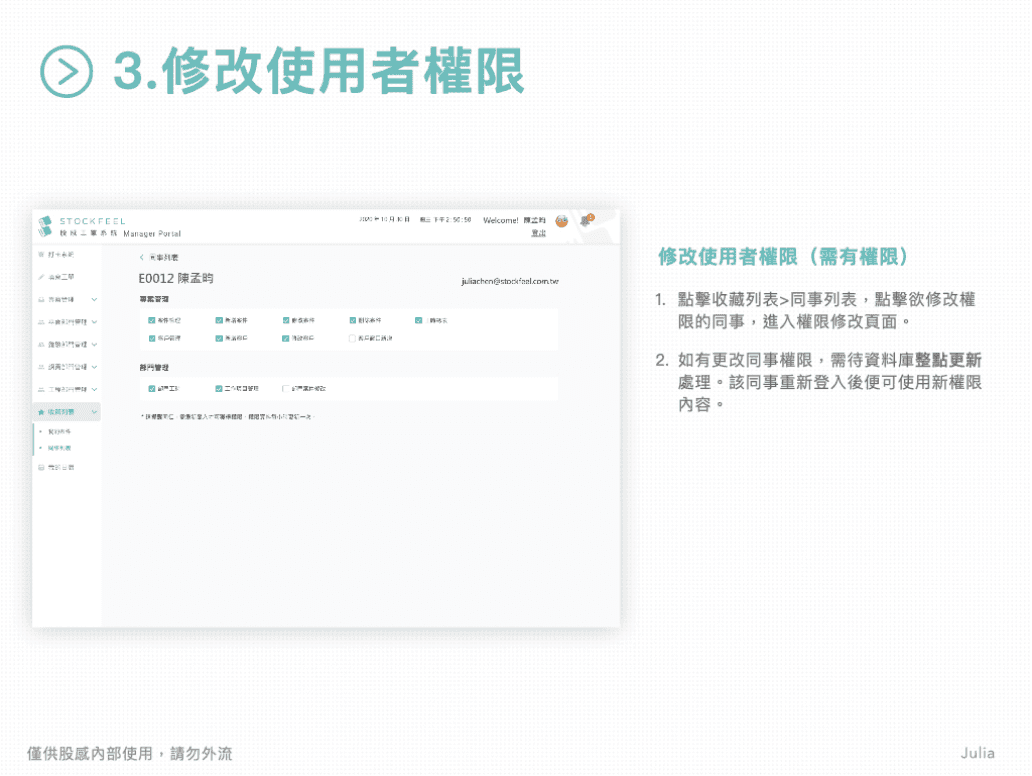
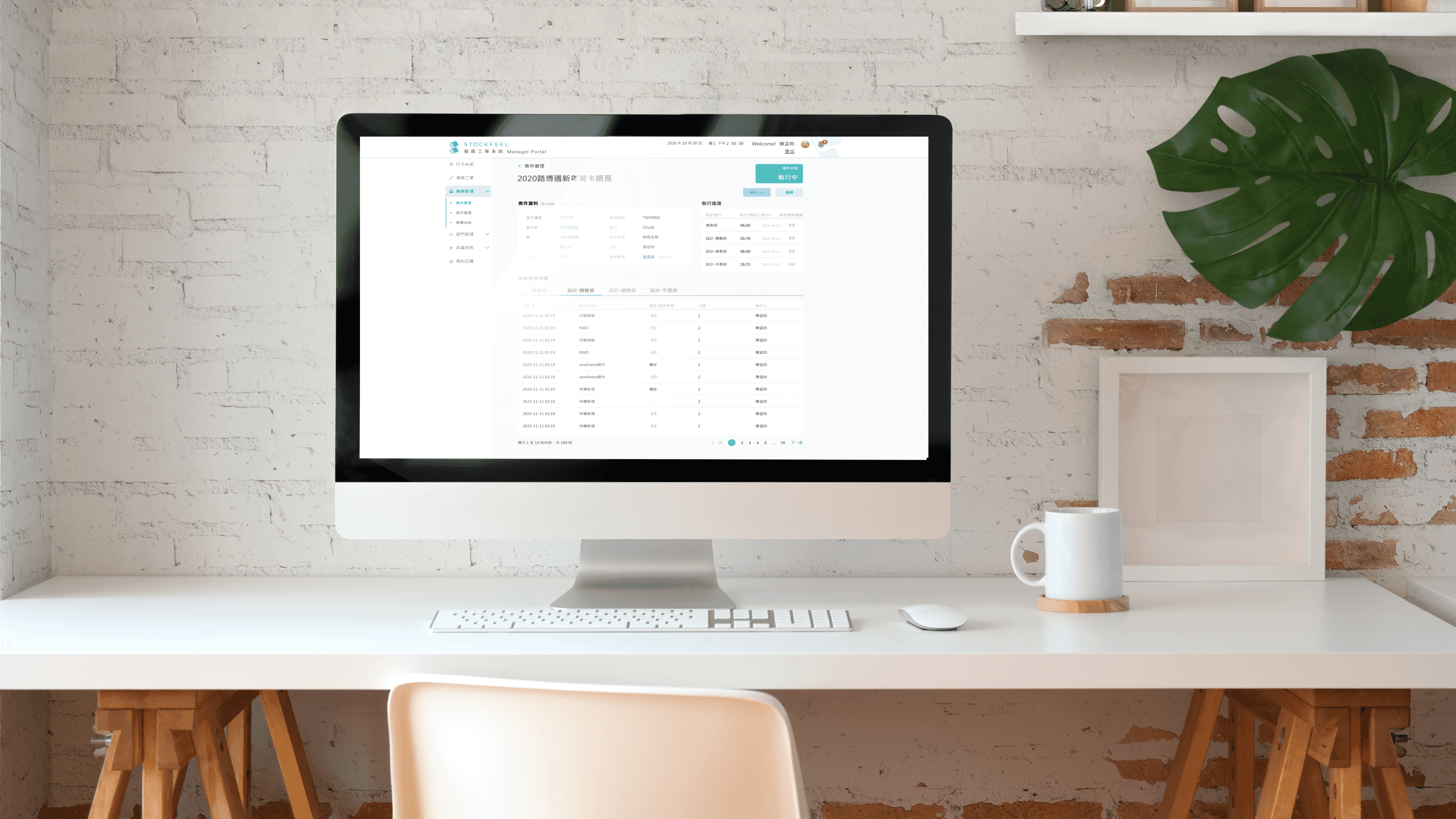
product operation manuals
Reflection
This project reinforced my view that strong enterprise design is less about adding features and more about defining clear rules and boundaries.
By focusing on alignment and system clarity, design became a tool to reduce organizational friction rather than surface-level UI optimization.
Introduction
At a Glance
Problem & Opportunity
Before this project, StockFeel did not have a unified membership system. Users could freely browse content, but the product lacked the ability to understand individual behavior, retain preferences, or deliver personalized experiences.
From a business perspective, this limited long-term engagement and made it difficult to evolve beyond content distribution.
The core challenge was not simply adding accounts, but defining what value membership should provide at the moment users decide to sign in.
The Goal
As the organization scaled, fragmented tools and manual processes led to:
Inconsistent data definitions and unclear ownership
High coordination cost across departments
Limited visibility into operational status and performance
Establish a centralized system to support core operational workflows
Reduce manual coordination and error-prone processes
Define clear data ownership, permissions, and role boundaries
Build a system structure that could scale with organizational growth
Research & Insights
Organizational & Workflow Analysis
I collaborated with stakeholders from different departments to understand their daily workflows, decision points, and data dependencies. This revealed that many conflicts stemmed not from missing features, but from unclear rules and overlapping responsibilities.
Specialist/Assistant
Head of the Dept.
Management Dept.
Financial Dept.
Key Insights
1. Users cared more about predictable rules and consistent behavior than having more features.
Users needed predictable rules and consistent data behavior to complete their work efficiently.
2. Permission design was a core product problem
Different roles required access to the same data at different levels, making permission modeling a foundational design decision rather than an implementation detail.
3. For ERP users, stability and clarity mattered more than exploration or experimentation.
Unlike consumer products, ERP users value stability and clarity over discoverability or experimentation.
Key Design Decisions
Designed the ERP as a system, not individual pages
I prioritized system logic—data flow, permissions, and role relationships—before refining UI details.
Mapped organizational structure into a clear permission model
Roles and responsibilities were translated into explicit access rules to balance flexibility and control.
Standardized data definitions and interaction patterns
Legacy data was consolidated into a unified structure, and interactions were standardized to reduce errors and learning cost.
Design Process & Execution
System Mapping & Specification
I focused on documenting system-level rules—data sources, permissions, and state changes—to ensure design intent matched engineering implementation.
Cross-Functional Collaboration
Regular reviews with product owners, operations, and engineers ensured feasibility and shared understanding before development.
Project serial data and specification documents
Inventory of the content of data conversion
Iteration & Validation
Design decisions were iterated based on stakeholder feedback and real operational scenarios, focusing on clarity and edge-case handling.
Outcome
The ERP system successfully centralized operations across departments and established a shared foundation for future growth.
Operational workflows became more standardized and predictable
Cross-department coordination cost was reduced
Data visibility and ownership were clearly defined
The project was adopted as a long-term internal platform and continued to evolve as business needs expanded.
Rating interaction
Different situation of buttons
#253988
#187386
#30BBBB
#4B68BE
Main Color
Typography
regular, bold
Dropdown with filter and btn
regular, bold
Aa
字體
Roboto font-family
Microsoft-Microsoft JhengHei
Different progress marks of project
* The interface is currently available in Traditional Chinese only.
product operation manuals
Reflection
This project reinforced my view that strong enterprise design is less about adding features and more about defining clear rules and boundaries.
By focusing on alignment and system clarity, design became a tool to reduce organizational friction rather than surface-level UI optimization.