Product Design/ UIUX Design
Product Design/ UIUX Design
Product Design/ UIUX Design
MX Token Holding Decision Design
MX Token Holding Decision Design
MX Token Holding Decision Design
Designing token decision support to make benefits actionable
— MEXC
Background
MX is the platform token within the MEXC ecosystem.
However, for most users, the value of holding MX was unclear and often felt like promotional messaging rather than something tied to actual product usage.
This project focused on redesigning how users understand, evaluate, and decide to hold MX by connecting token benefits directly to real product usage and decision contexts.
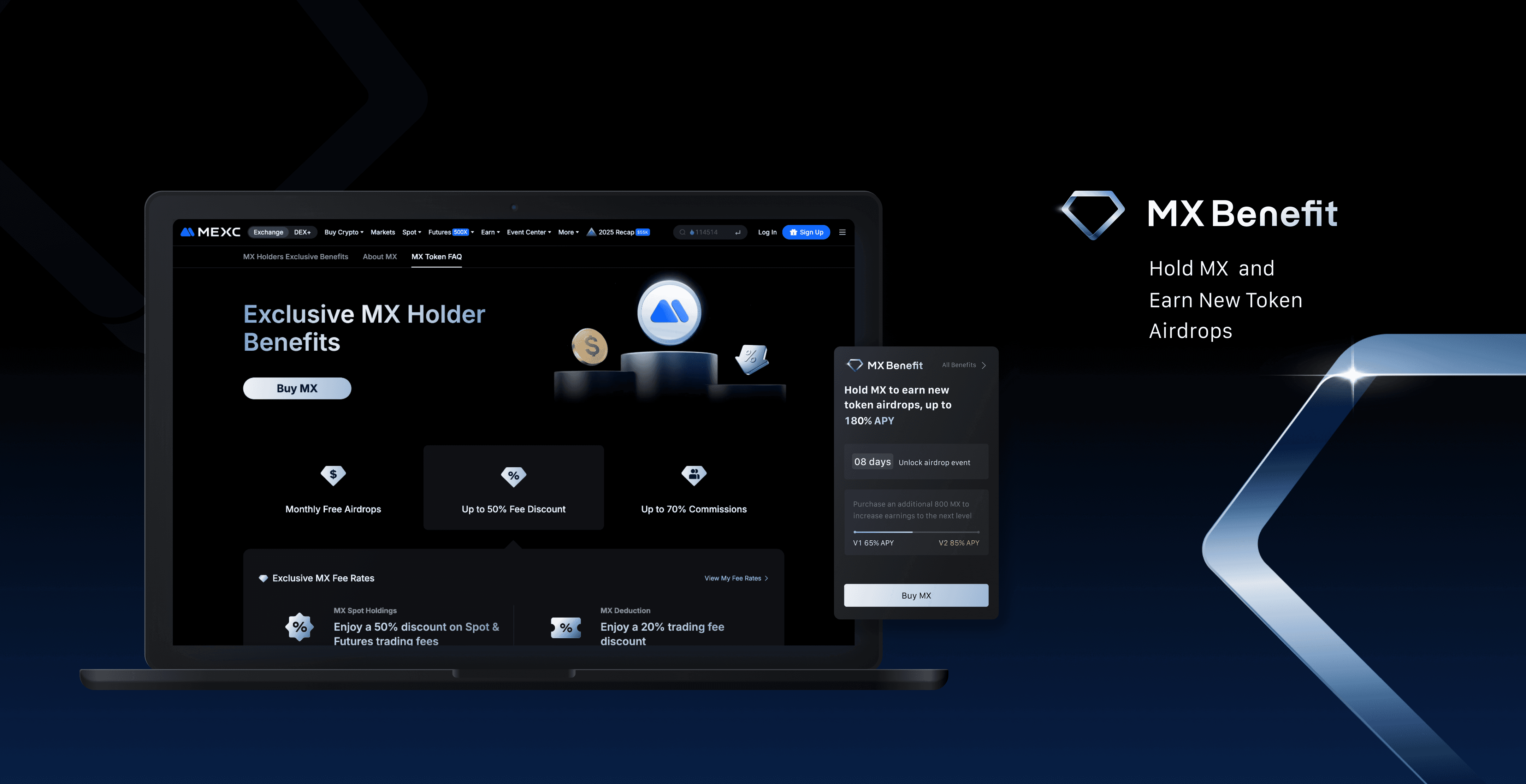
Web Platform MX Initiative|Personal Achievements
I collaborated with Operations, Product, and Data teams to turn the abstract goal of increasing MX holding into concrete decision moments, focusing design efforts on where holding decisions actually occur rather than optimizing all pages evenly.
1
Focused on the moments where users actually decide whether holding MX is worth it, rather than optimizing every page equally.
2
Aligned design decisions with real holding behavior through close collaboration with product, operations, and data teams.
3
Used design to support confident decisions, not to push promotional messaging.

Web Platform MX Initiative|Personal Achievements
I collaborated with Operations, Product, and Data teams to turn the abstract goal of increasing MX holding into concrete decision moments, focusing design efforts on where holding decisions actually occur rather than optimizing all pages evenly.
1
Focused on the moments where users actually decide whether holding MX is worth it, rather than optimizing every page equally.
2
Aligned design decisions with real holding behavior through close collaboration with product, operations, and data teams.
3
Used design to support confident decisions, not to push promotional messaging.
Introduction
At a Glance
Why & What
Why users hesitated to hold MX
Token benefits were fragmented across different pages and campaigns
Value was described abstractly, not tied to clear user actions
Users lacked clear signals for when and why holding MX mattered
The Goal
Primary Goal
Increase users’ willingness to hold MX and drive trading conversion.
Supporting Goal
Increase exposure of MX benefits at key decision moments
Reduce learning barriers and entry friction for new users
Strengthen long-term holding motivation for existing users
Research & Key Insights
1
Insight 1|Users don’t ignore MX benefits — they simply don’t see them at the right moment.
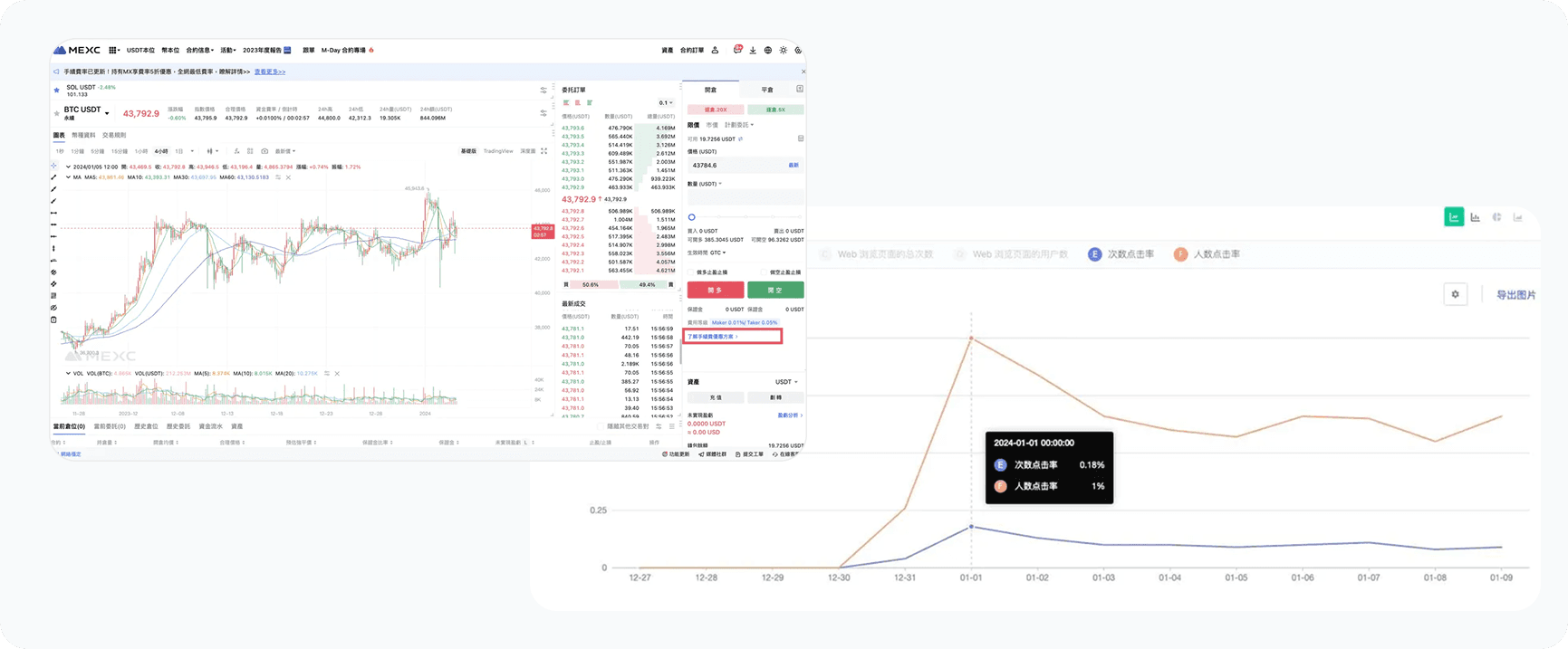
Quantitative data shows that in futures trading, the click-through rate for the “fee discount” entry point is only 0.18%.
Users’ attention is highly concentrated on the trading area, and MX-related benefits—even when available—rarely influence real-time decisions.
The issue is not whether exposure exists, but when it happens.
2
Insight 2|User hesitation comes from uncertainty, not from rational risk assessment.
From user interviews, most users did not reject holding MX due to calculated risk.
Instead, they avoided it because of a lack of perceived safety and predictable returns—choosing to stay away from “uncertainty.”
What users needed was not more rules or explanations, but clear trust signals.
2
Insight 3|The core problem isn’t complex rules — it’s the absence of a clear mental model.
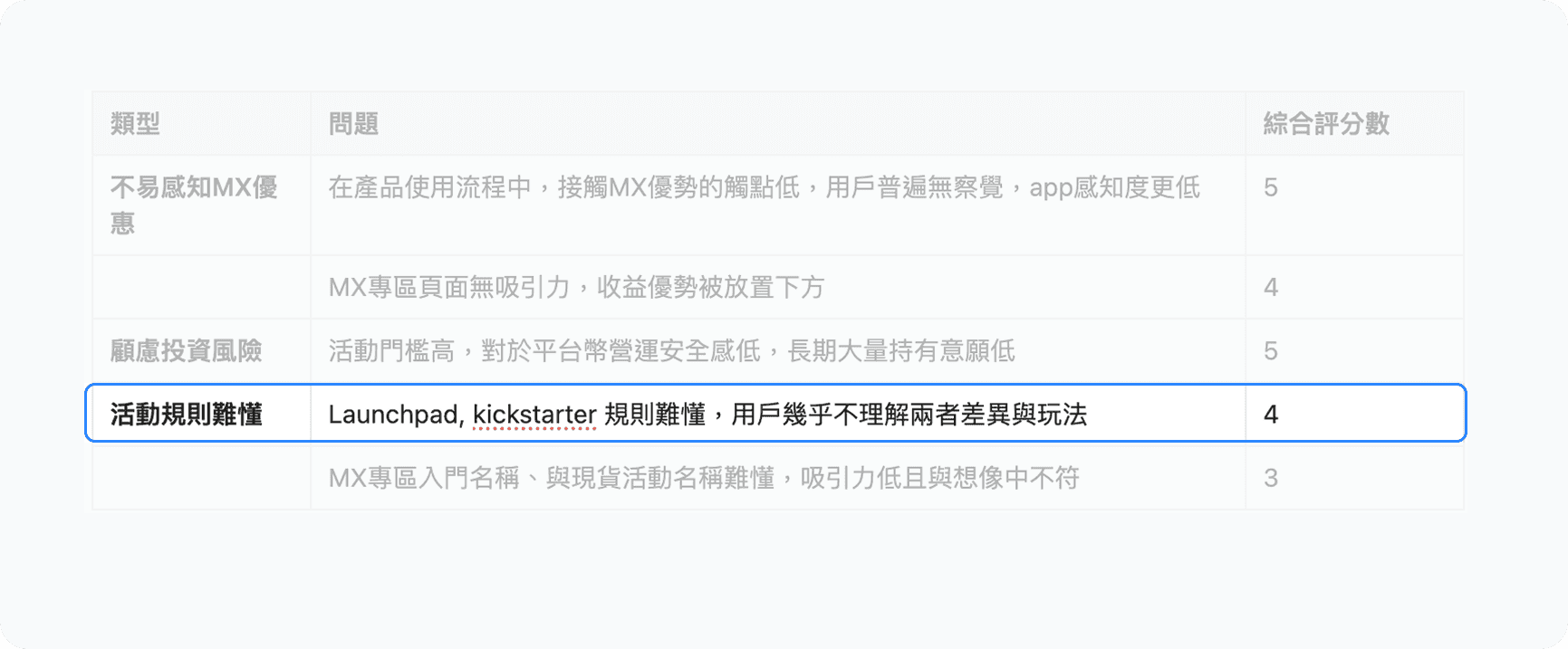
Users frequently mentioned difficulty understanding event mechanics such as Launchpad or Kickstarter.
However, the real issue was not rule complexity itself, but the lack of a coherent answer to a more fundamental question:
“Why should I hold MX?”
Without understanding the meaning and long-term value of holding MX, simplifying rules alone was not enough to trigger action.
How
User Segmentation
Different users require different forms of persuasion.
New Users
User Features
Prefer low-risk actions
Struggle with long-term value concepts
Easily overwhelmed by complex rules
Strategy
Lower cognitive and operational barriers
Provide stable, small-amount participation options to build confidence
Experienced Users
User Features
Highly sensitive to returns
More concerned about platform risk (post-FTX context)
Strategy
Emphasize tangible benefits such as fee savings, APY, and actual returns
We focused on lowering friction for new users, while making returns and benefits clearer for experienced users
Key Design Decisions
Visibility
Decision
Make MX visible at the right moment
Added MX entry points within trading and selection flows
Strengthened contextual benefit
cues on market pages Reorganized MX-related content hierarchy
Understanding
Decision
Explain benefits in context, not in isolation
Highlighted fee discounts during order confirmation
Combined MX exposure with trading pairs and onboarding paths
Explained APY and yield benefits during small-amount asset exchanges
Action
Decision
Reduce friction before increasing commitment
Introduced a streamlined “quick buy” flow
Enabled users to experience value before requiring full understanding
We intentionally did not require users to fully understand all rules upfront—value is learned through experience.
Strategy
Rather than redesigning everything at once, we focused on moments where users were most likely to decide whether holding MX made sense—such as trading, confirming orders, and managing small balances.
This ensured design effort was tied to real holding intent, not surface-level exposure.
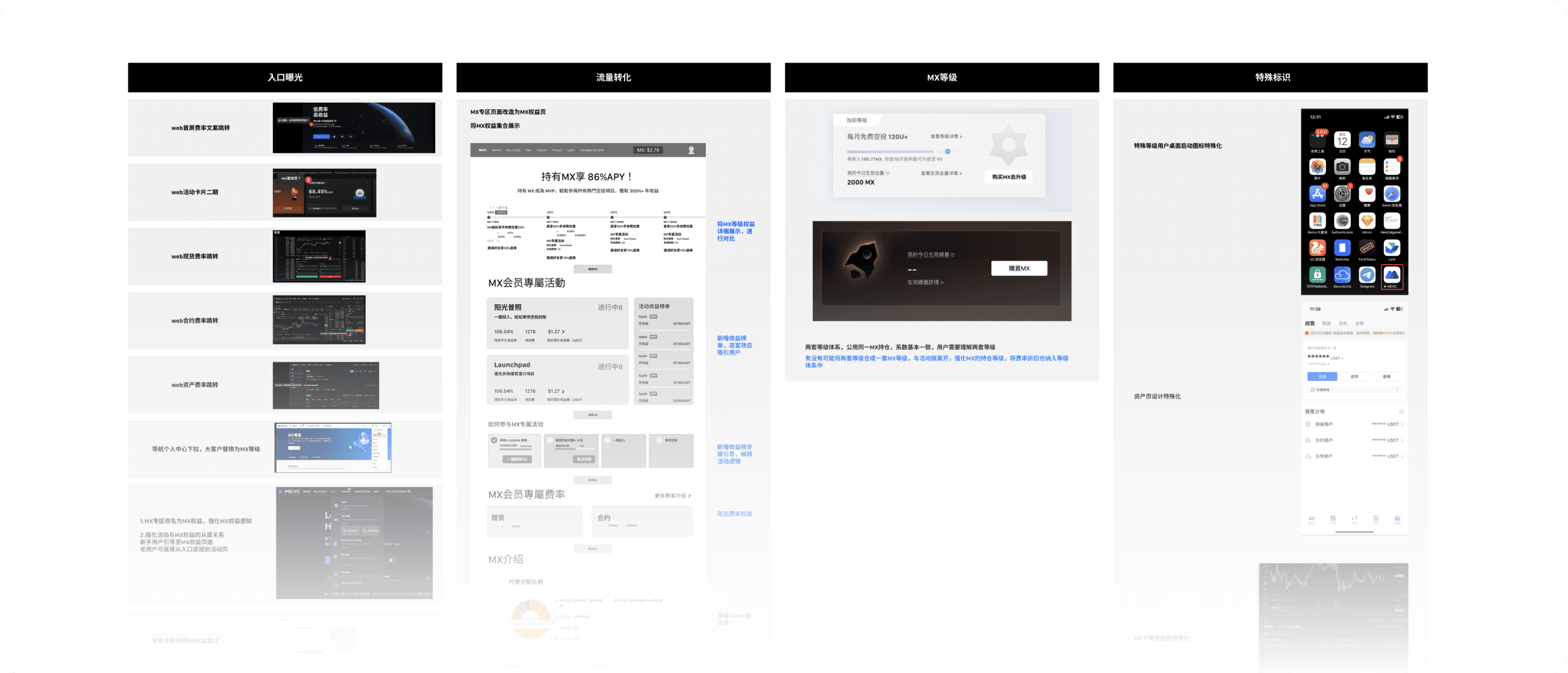
Analysis and Decision-Making Process
So What
Execution Scope
Based on impact-to-effort evaluation, the first phase focused on high-leverage scenarios:
Entry points to MX-related campaigns in global navigation
MX benefit exposure on order confirmation pages
Optimized small-amount MX swap modules on asset pages
Redesign of the MX dedicated hub
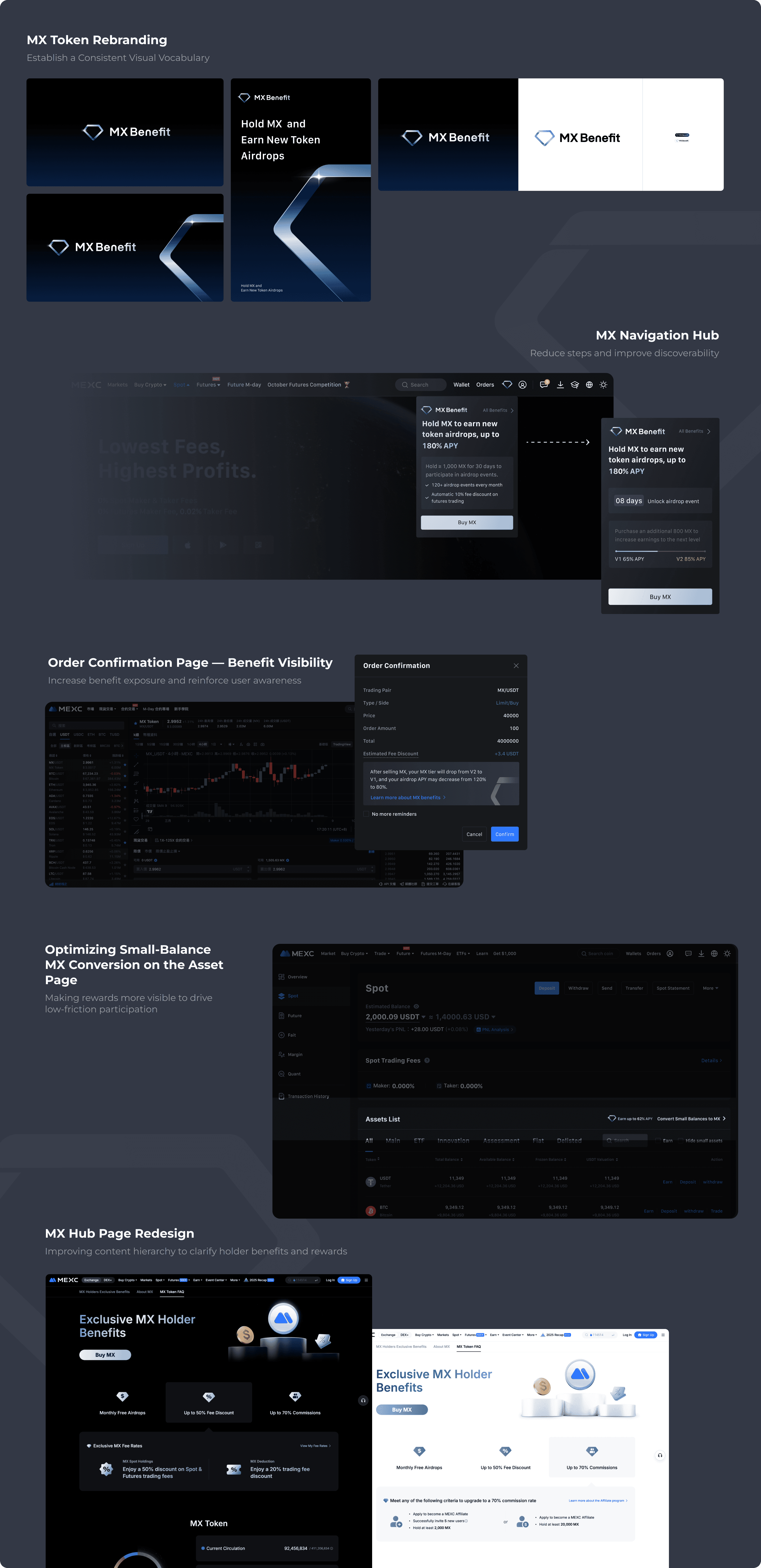
Design Solutions
Outcome & Reflection
In this project, I primarily led research direction, defined key exposure scenarios, and collaborated with cross-functional teams to make design trade-offs across multiple modules.
While not all optimizations were fully launched, this project successfully established a clearer way to reason about holding decisions across different product scenarios
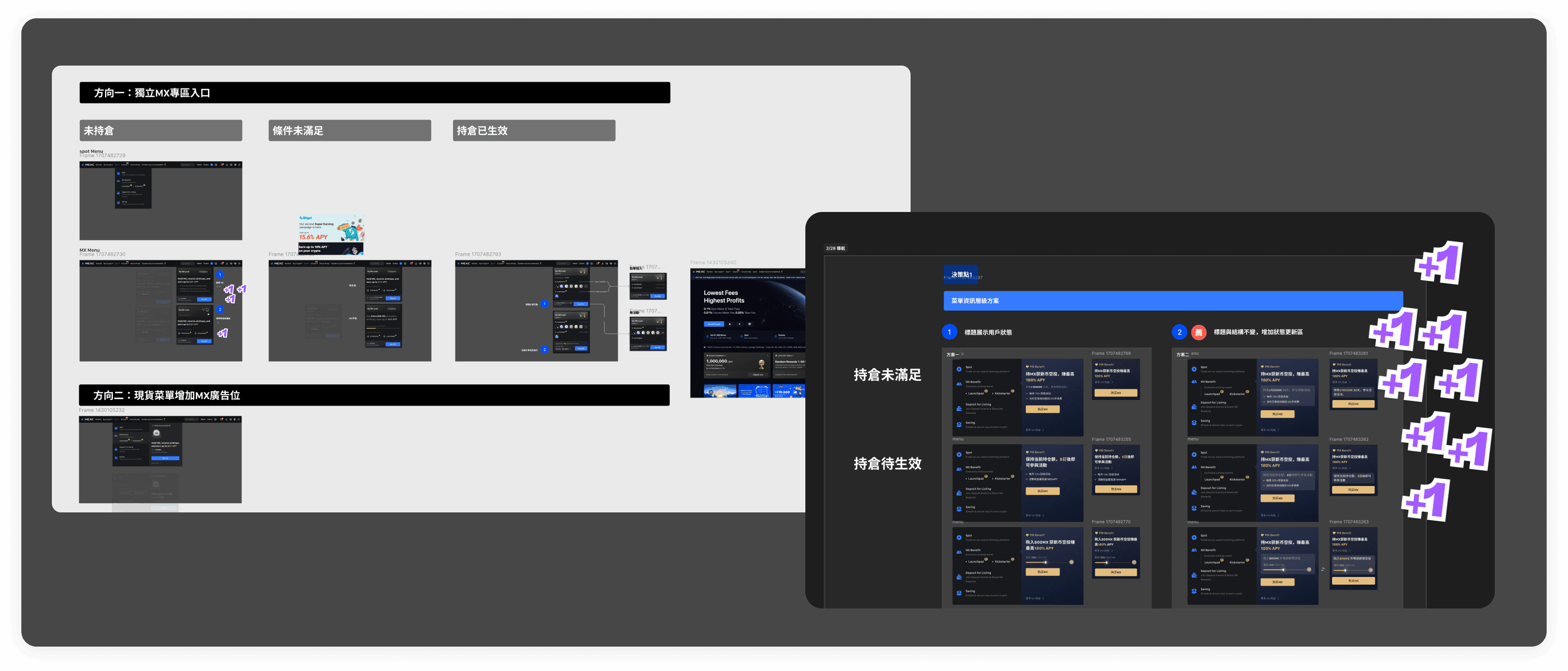
Design Critique Process
Design Impact
By embedding MX benefits into high-intent scenarios—such as order confirmation, asset pages, and market browsing—the design shifted from passive explanation to supporting real holding decisions.
Scattered benefit information was translated into in-context cues like fee discounts, APY, and airdrop visibility, reducing uncertainty and lowering both cognitive and psychological barriers.
As a result, design moved beyond layout optimization and became a practical partner in business discussions around holding rate and conversion.

Introduction
At a Glance
Why & What
Why users hesitated to hold MX
Token benefits were fragmented across different pages and campaigns
Value was described abstractly, not tied to clear user actions
Users lacked clear signals for when and why holding MX mattered
The Goal
Primary Goal
Increase users’ willingness to hold MX and drive trading conversion.
Supporting Goal
Increase exposure of MX benefits at key decision moments
Reduce learning barriers and entry friction for new users
Strengthen long-term holding motivation for existing users
Research & Key Insights
1
Insight 1|Users don’t ignore MX benefits — they simply don’t see them at the right moment.
Quantitative data shows that in futures trading, the click-through rate for the “fee discount” entry point is only 0.18%.
Users’ attention is highly concentrated on the trading area, and MX-related benefits—even when available—rarely influence real-time decisions.
The issue is not whether exposure exists, but when it happens.
2
Insight 2|User hesitation comes from uncertainty, not from rational risk assessment.
From user interviews, most users did not reject holding MX due to calculated risk.
Instead, they avoided it because of a lack of perceived safety and predictable returns—choosing to stay away from “uncertainty.”
What users needed was not more rules or explanations, but clear trust signals.
2
Insight 3|The core problem isn’t complex rules — it’s the absence of a clear mental model.
Users frequently mentioned difficulty understanding event mechanics such as Launchpad or Kickstarter.
However, the real issue was not rule complexity itself, but the lack of a coherent answer to a more fundamental question:
“Why should I hold MX?”
Without understanding the meaning and long-term value of holding MX, simplifying rules alone was not enough to trigger action.
How
User Segmentation
Different users require different forms of persuasion.
New Users
User Features
Prefer low-risk actions
Struggle with long-term value concepts
Easily overwhelmed by complex rules
Strategy
Lower cognitive and operational barriers
Provide stable, small-amount participation options to build confidence
Experienced Users
User Features
Highly sensitive to returns
More concerned about platform risk (post-FTX context)
Strategy
Emphasize tangible benefits such as fee savings, APY, and actual returns
We focused on lowering friction for new users, while making returns and benefits clearer for experienced users
Key Design Decisions
Visibility
Decision
Make MX visible at the right moment
Added MX entry points within trading and selection flows
Strengthened contextual benefit
cues on market pages Reorganized MX-related content hierarchy
Understanding
Decision
Explain benefits in context, not in isolation
Highlighted fee discounts during order confirmation
Combined MX exposure with trading pairs and onboarding paths
Explained APY and yield benefits during small-amount asset exchanges
Action
Decision
Reduce friction before increasing commitment
Introduced a streamlined “quick buy” flow
Enabled users to experience value before requiring full understanding
We intentionally did not require users to fully understand all rules upfront—value is learned through experience.
Strategy
Rather than redesigning everything at once, we focused on moments where users were most likely to decide whether holding MX made sense—such as trading, confirming orders, and managing small balances.
This ensured design effort was tied to real holding intent, not surface-level exposure.
Analysis and Decision-Making Process
So What
Execution Scope
Based on impact-to-effort evaluation, the first phase focused on high-leverage scenarios:
Entry points to MX-related campaigns in global navigation
MX benefit exposure on order confirmation pages
Optimized small-amount MX swap modules on asset pages
Redesign of the MX dedicated hub
Design Solutions
Outcome & Reflection
In this project, I primarily led research direction, defined key exposure scenarios, and collaborated with cross-functional teams to make design trade-offs across multiple modules.
While not all optimizations were fully launched, this project successfully established a clearer way to reason about holding decisions across different product scenarios
Design Critique Process
Design Impact
By embedding MX benefits into high-intent scenarios—such as order confirmation, asset pages, and market browsing—the design shifted from passive explanation to supporting real holding decisions.
Scattered benefit information was translated into in-context cues like fee discounts, APY, and airdrop visibility, reducing uncertainty and lowering both cognitive and psychological barriers.
As a result, design moved beyond layout optimization and became a practical partner in business discussions around holding rate and conversion.